
The quickest way to travel Saigon to Cam Ranh is a 70-minute direct flight into Cam Ranh International Airport, a short drive from the Bai Dai resort strip. Trains take 7 to 10 hours to Nha Trang, sleeper buses 6.5 to 9 hours, and a private car around 5 to 6 hours (as of November 2026).
Written by the Cam Ranh Mystery Villas team. Last updated November 18, 2026. Timetables, fares, tolls and terminal assignments change often, so check the official sources listed at the end of this page before you travel.
Key facts (as of November 2026)
- Direct flights from Tan Son Nhat (SGN) to Cam Ranh (CXR) take about 1 hour 10 minutes; Vietnam Airlines alone lists 3 to 4 flights a day, with economy fares from roughly 600,000 to 2,000,000 VND one way.
- Cam Ranh has no passenger train station. Trains from Saigon Station run 411 km to Nha Trang Station in 7 hours 9 minutes to 9 hours 55 minutes, with 12 departures a day on the timetable checked in October 2026.
- Sleeper and cabin buses between Ho Chi Minh City and Nha Trang take 6.5 to 9 hours, with tickets on booking platforms from about 280,000 to 750,000 VND.
- The North–South Expressway has been continuous from Ho Chi Minh City to Nha Trang since April 26, 2024; plan on 5 to 6 hours by car to Cam Ranh.
- From Cam Ranh airport, the Bai Dai (Long Beach) resorts are 3 to 15 km away, about 15 to 20 minutes, and a taxi or Grab costs roughly 100,000 to 200,000 VND (as of July 2026).
- October to December is the rainy season on this coast, with November the wettest month; January to April is the driest and calmest period.
- Since July 1, 2025, Cam Ranh belongs to the enlarged Khanh Hoa province, formed by merging Khanh Hoa and Ninh Thuan.
What is the fastest way from Saigon to Cam Ranh?
Flying is the fastest way, and for most travelers heading to the beach it is also the simplest. Cam Ranh International Airport (Sân bay Quốc tế Cam Ranh) sits on the Cam Ranh peninsula itself, so you land a few kilometers from the Bai Dai (Bãi Dài, also called Long Beach) resort strip rather than in Nha Trang, which is 35 km to the north. No other option puts you that close to the sand.
The other three choices each have a clear reason to exist. The train is the scenic and most relaxed option, but it ends at Nha Trang Station (Ga Nha Trang), so you finish with a road transfer of about 35 to 45 minutes back south. The sleeper bus is the cheapest and runs through the night, and a handful of limousine vans go directly to Cam Ranh town. A private car costs the most per vehicle but becomes reasonable when four or more people split it, and it is the only door-to-door choice.
The table below compares all four. The “door to door” column is our own estimate built from the published travel times plus check-in, waiting and the final transfer to Bai Dai, so treat it as a planning figure and not a promise.
| Option | Travel time (published) | Door to door to Bai Dai (estimate) | Typical one-way price (as of Oct–Nov 2026) | Best for |
|---|---|---|---|---|
| Flight SGN–CXR | About 1 h 10 min | About 3.5–4.5 h | Roughly 600,000–2,000,000 VND per person in economy; more at peak dates | Families, short trips, anyone staying on Bai Dai |
| Train to Nha Trang | 7 h 09 min–9 h 55 min | About 8.5–11 h | Soft seat from 440,000 VND; 6-berth from 560,000 VND; 4-berth from 730,000 VND (agent prices) | Scenery lovers, nervous road travelers, overnight sleepers |
| Sleeper or cabin bus | 6.5–9 h to Nha Trang | About 7.5–10 h | About 280,000–750,000 VND per person | Budget travelers, late bookers |
| Private car or van | 4 h 45 min–7 h 30 min listed; 5–6 h realistic | About 5–6.5 h | From 2,590,000 VND per vehicle (HCMC–Nha Trang listing) plus tolls if not included | Groups of 4+, lots of luggage, flexible stops |
One geography note helps when you read booking sites. Many of them label the route “Ho Chi Minh City to Nha Trang” even when the airport code is CXR, because Cam Ranh airport is the only commercial airport serving Nha Trang. If your stay is on the peninsula, “Nha Trang (CXR)” on a flight ticket is exactly what you want, while “Nha Trang” on a train or bus ticket means a further transfer south.
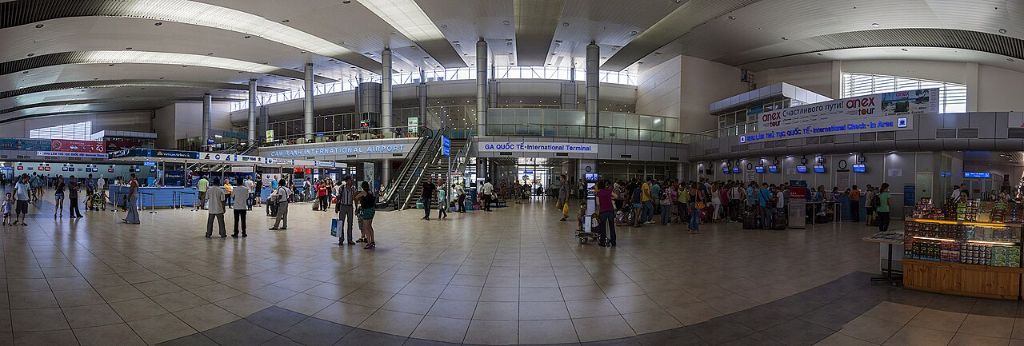

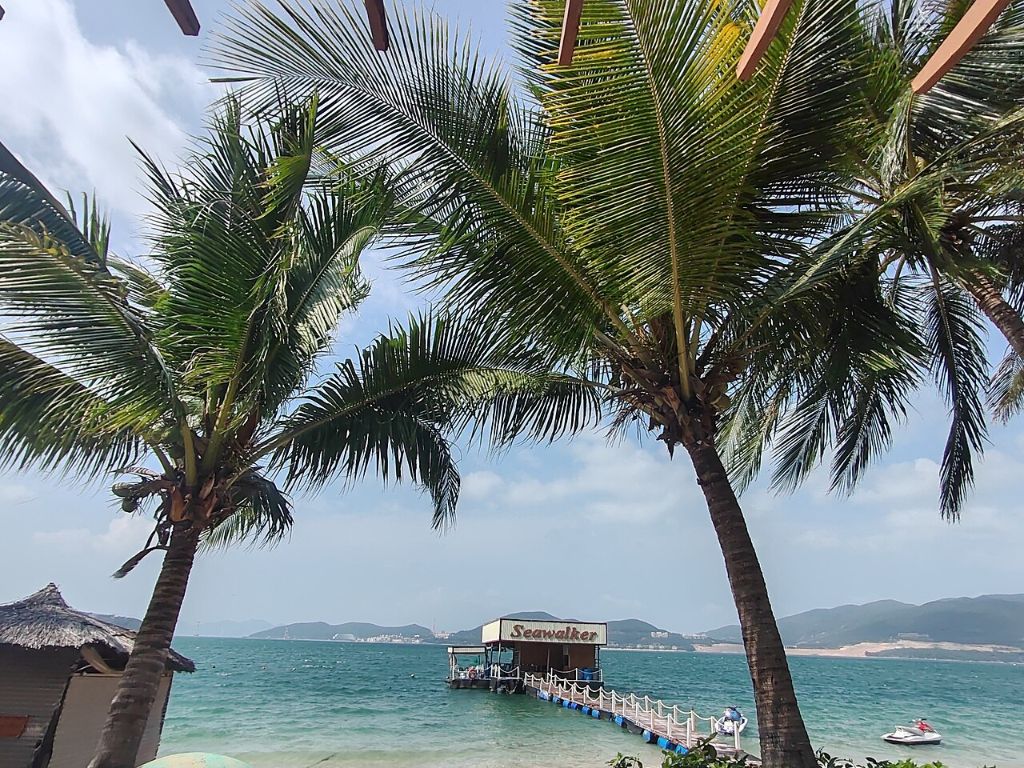
Photos: 1) Castelfranco, CC BY-SA 4.0; 2) Tycho, CC BY-SA 3.0; 3) Huangdan2060, CC BY 4.0; via Wikimedia Commons.
How do flights from Saigon to Cam Ranh work?
Flights leave from Tan Son Nhat International Airport (Sân bay Quốc tế Tân Sơn Nhất, SGN) and land at Cam Ranh’s domestic Terminal 1 about 1 hour 10 minutes later (as of November 2026). It is one of the shortest domestic hops in the country, and that short flight time is why the plane wins on total journey time even after you add the ride to the airport and the wait at the gate.
Which airlines fly the route?
Vietnam Airlines and Vietjet are the two carriers listed by every schedule source (as of November 2026). Bamboo Airways appears on the route in some listings and not in others, so check before you fly if you are counting on it. Sun PhuQuoc Airways, the newest Vietnamese airline, serves Cam Ranh from Phu Quoc and from Hanoi (as of July 2026) but not from Ho Chi Minh City.
Vietnam Airlines lists 3 to 4 flights a day on its own (as of November 2026). One route planner counts 53 flights a week across airlines and a booking platform shows 11 daily flight options, so the true total across all carriers is somewhere around 8 to 11 a day and shifts with the season. In practice you can usually find a morning, midday and late-afternoon departure.
What do tickets cost?
Vietnam Airlines showed economy fares from about 870,000 VND one way for late November 2026 dates, and describes its usual one-way range as roughly 600,000 to 2,000,000 VND, with some fares climbing as high as 4,600,000 VND (as of November 2026). A general travel guide puts the entry price for the route at around 700,000 VND (as of July 2026). Promotional fares on booking platforms occasionally dip lower, but they sell out and often exclude luggage.
What about baggage?
Baggage is where the headline fare and the real cost drift apart. According to a third-party comparison (as of October 2026):
- Vietjet: the Eco fare includes 7 kg of carry-on and no checked bag. Adding 20 kg costs about 180,000 to 350,000 VND when bought online in advance and about 400,000 to 600,000 VND at the airport counter.
- Vietnam Airlines: 12 kg of carry-on, with 23 kg checked on most domestic economy fares. Some of the cheapest fare types may not include a checked bag, so read the fare conditions before you pay.
- Bamboo Airways: 20 kg checked on most fares.
For a beach week with children, snorkels and sunscreen, a ticket that looks 200,000 VND cheaper can end up costing more once a suitcase is added. Compare the total, not the first number on the screen.
Local tip: If you fly a hand-luggage-only fare and later decide you need a suitcase, add it online before you leave for the airport. The same 20 kg can cost roughly twice as much at the check-in counter (as of October 2026).
Which terminal do you need at Tan Son Nhat?
It depends on the airline: Vietnam Airlines and Bamboo Airways domestic flights use the new Terminal 3, while Vietjet has stayed at Terminal 1 (as of August 2025). Terminal 3 opened in April 2025 as a domestic-only building, and Pacific Airlines, VASCO and Vietravel Airlines moved there in the same month as Bamboo. Terminal assignments have changed more than once since the opening, so look at your booking confirmation the day before departure.
This matters because the terminals are not side by side, and a taxi dropped at the wrong one costs you time you may not have on a morning with heavy traffic. Tell the driver the terminal number, not only the airport name. If you are staying in central Saigon for a night before the flight, the local team at Ho Chi Minh Tours has a guide to getting around the city that covers ride-hailing apps, taxis and buses, which is useful for planning the ride to the airport, the railway station or the bus terminals.
A reminder for readers using older maps and guidebooks: since July 1, 2025, Ho Chi Minh City also includes the former Binh Duong and Ba Ria–Vung Tau provinces. The city is now far larger on paper, but the airport, Saigon Station and the main bus terminals are all still in the original urban area.
At the other end, Cam Ranh airport has two separate buildings (as of October 2026). Terminal 1 handles domestic flights, which is where you will arrive from Saigon. Terminal 2 handles international flights. The buildings have separate drop-off points, so on the way home make sure your driver takes you to Terminal 1.
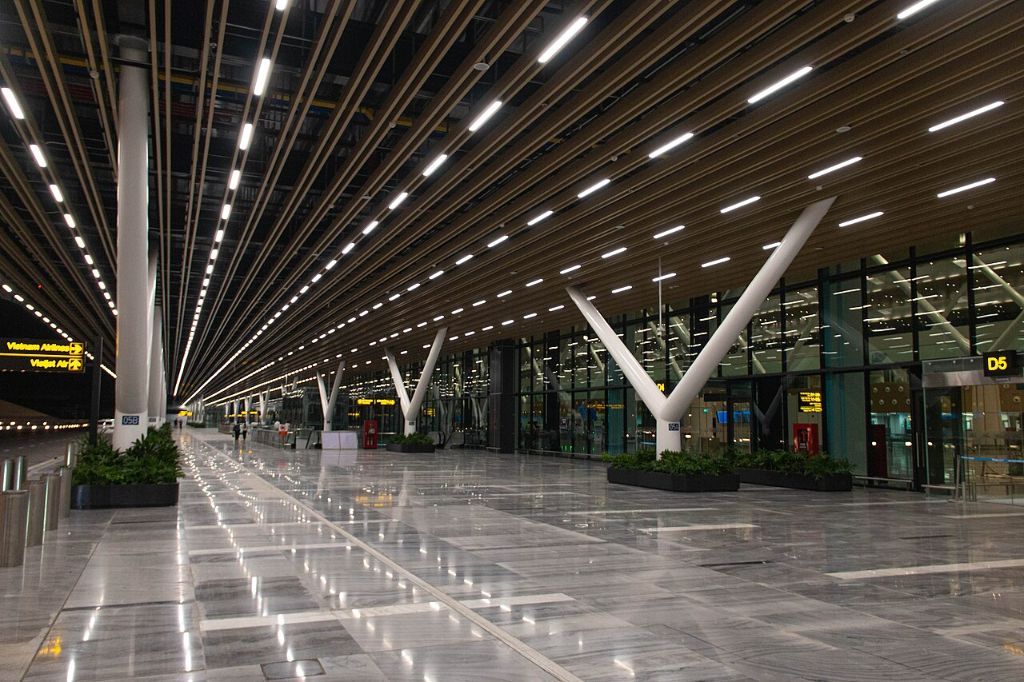
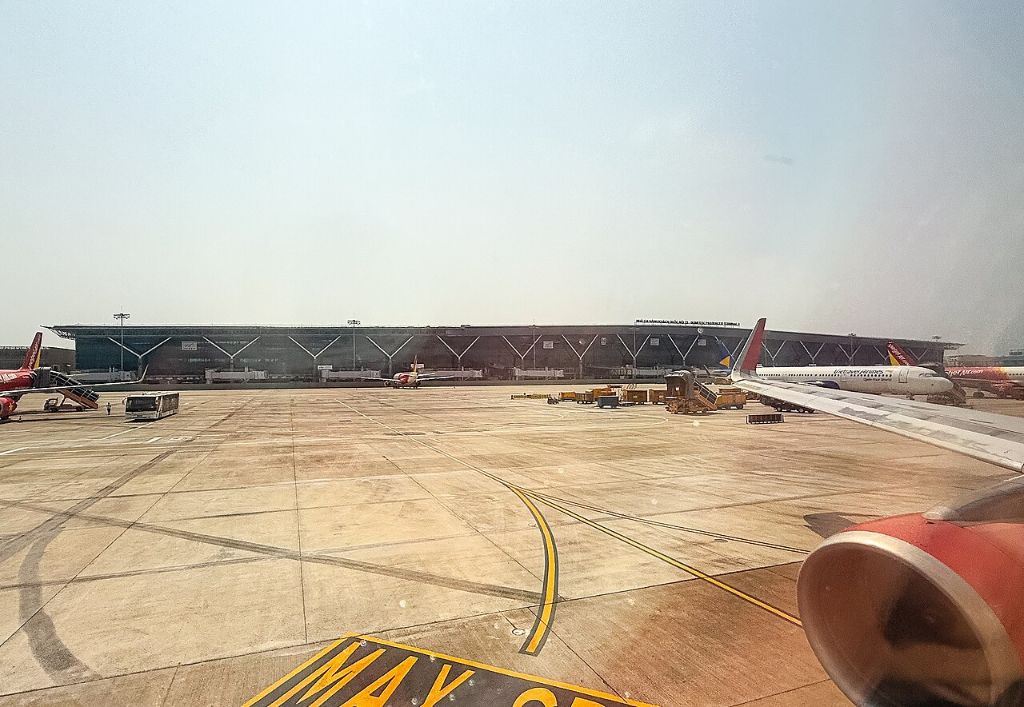


Photos: 1) MinhVN123, CC BY-SA 4.0; 2) Biodin, CC BY 4.0; 3) Aeroprints.com, CC BY-SA 3.0; 4) S5A-0043, CC BY 4.0; via Wikimedia Commons.
Can you take the train to Cam Ranh?
Not all the way: there is no passenger train station in Cam Ranh, so you ride to Nha Trang and continue by road. The railway does pass through Cam Ranh, and Nga Ba Station (Ga Ngã Ba) in the Ba Ngòi area is on the line about 49 km south of Nha Trang Station, but it no longer handles passengers and is used only for technical operations. Do not plan around getting off there.
The journey itself runs from Saigon Railway Station (Ga Sài Gòn) in the old District 3 to Nha Trang Station in the city center, a distance of 411 km. On the timetable checked in October 2026 there were 12 trains a day in each direction, taking between 7 hours 9 minutes and 9 hours 55 minutes. Some trains also stop at Dĩ An and Biên Hòa on the way out of the city.
Which trains are useful?
There are two families of trains. The SE trains are the long-distance Reunification services that continue north toward Da Nang and Hanoi. The SNT trains run only between Saigon and Nha Trang, leave late in the evening and are timed for sleeping. The table lists the departures that fit a holiday schedule best; the evening SE trains that are left out arrive in Nha Trang between about 01:50 and 04:55, which is awkward for a villa or hotel check-in.
| Train | Leaves Saigon | Arrives Nha Trang | Duration | Good for |
|---|---|---|---|---|
| SE86 | 06:00 | 13:43 | 7 h 43 min | Early start, afternoon check-in |
| SE66 | 08:45 | 16:06 | 7 h 21 min | Most comfortable daytime timing |
| SE22 | 10:15 | 18:05 | 7 h 50 min | Late risers, arrive at dusk |
| SE10 | 13:15 | 21:51 | 8 h 36 min | Half day in Saigon first |
| SNT2 | 21:45 | 05:40 (+1) | 7 h 55 min | Overnight sleeper, private carriages |
| SNT4 | 22:15 | 06:30 (+1) | 8 h 15 min | Overnight sleeper, kinder arrival time |
| SNT6 | 22:45 | 08:15 (+1) | 9 h 30 min | Overnight sleeper, latest arrival |
Times are from the timetable checked on October 21, 2026, and Vietnam Railways adjusts schedules several times a year, especially around holidays. Heading back, useful departures from Nha Trang include SE76 at 08:47 and SE56 at 10:25 for a daytime ride, and SNT1 at 20:20 or SE1 at 22:42 for an overnight one (same timetable).
Seats, berths and fares
Three classes matter to visitors: the air-conditioned soft seat, the 6-berth “hard sleeper” cabin and the 4-berth “soft sleeper” cabin. Through a major booking agent, prices started at about 440,000 VND for a soft seat, 560,000 VND for a 6-berth and 730,000 VND for a 4-berth (as of October 2026). Agent prices include a service markup, so fares bought directly from Vietnam Railways are usually lower. The railway sells tickets on its own website, dsvn.vn, and at station counters; official fares can differ from agent prices, so confirm current prices there.
For something more comfortable, private operators attach their own refurbished carriages to SNT2. Listings showed Charmy Express from 2,700,000 VND and Hana Train from 2,380,000 VND (as of October 2026). These are sold per berth or per cabin depending on the agent, so read the listing carefully. Children under 5 travel free on standard trains when sharing a berth, and children aged 5 to 9 get a 25% discount, according to the same timetable page.
Local tip: If you take an SNT night train, arrange your onward car from Nha Trang Station in advance. Arriving at 05:40 with luggage and no ride is the least pleasant part of the train option, and most villas and resorts will not have rooms ready that early.
Planning a villa stay on Bai Dai? Send us your dates and group size and we will confirm which private pool villas are available. We can also advise on airport pickup timing so your flight, train or bus arrival lines up with check-in.
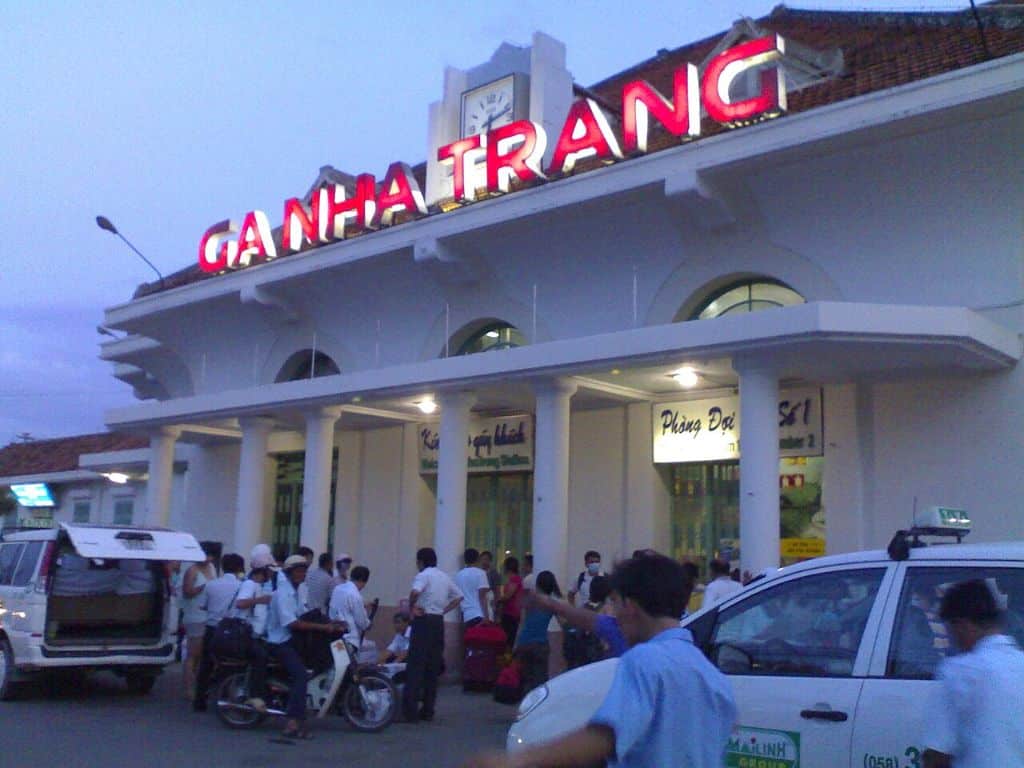

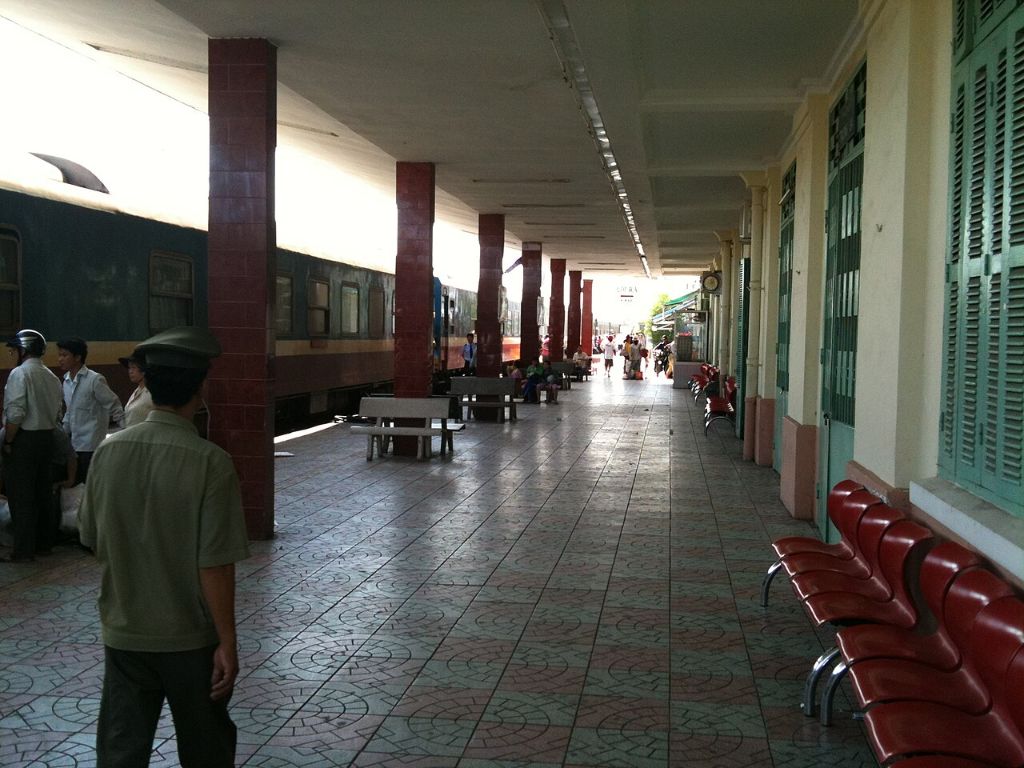
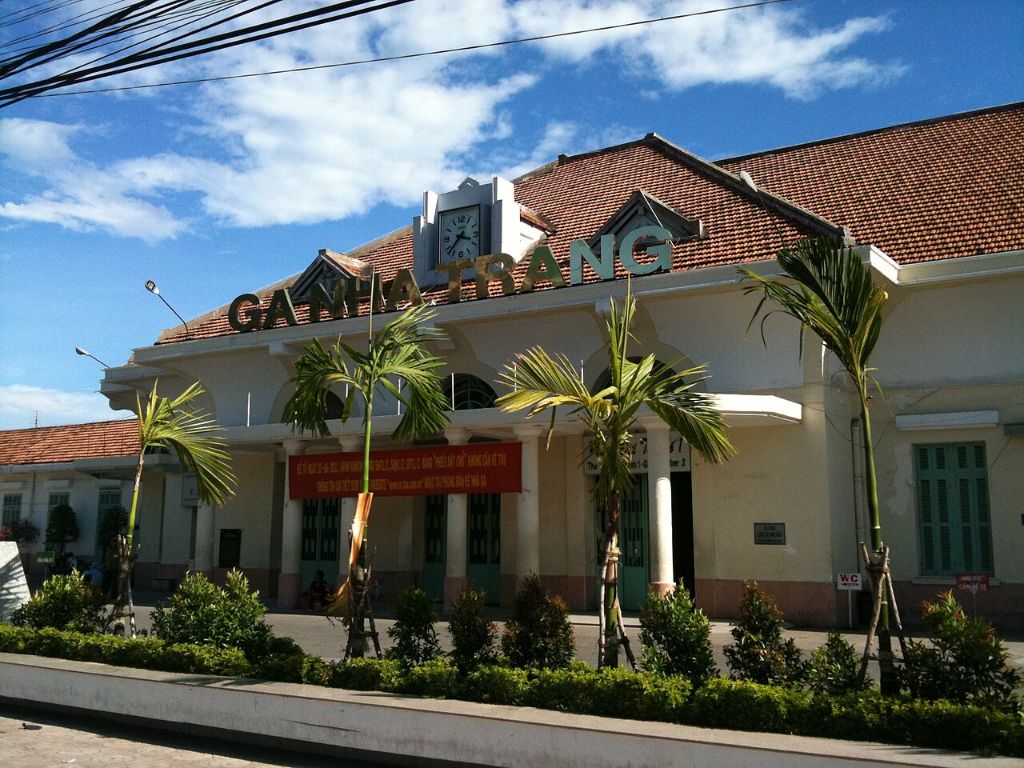
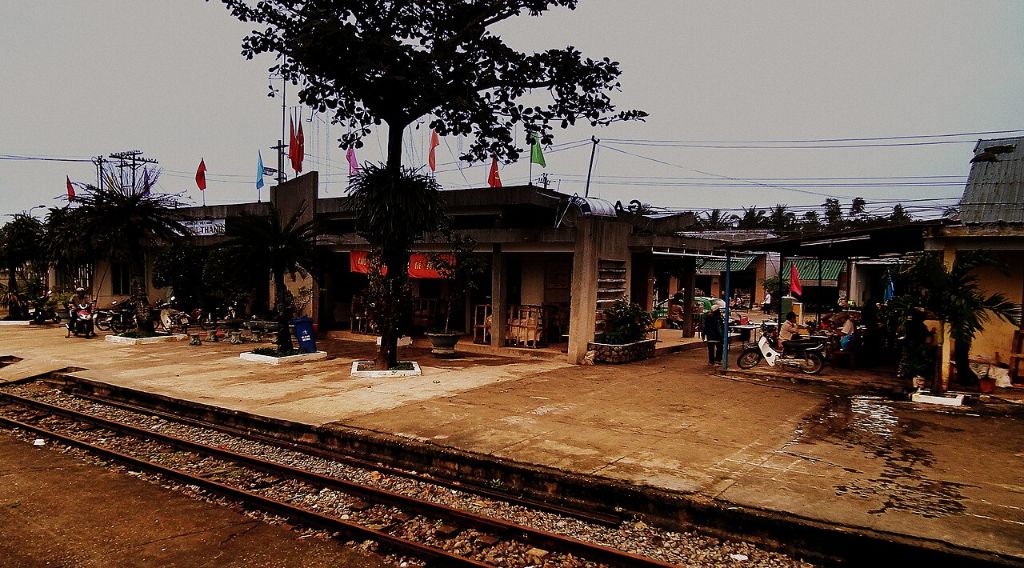
Photos: 1) Harry Pham at Vietnamese Wikipedia, CC BY 3.0; 2) Santi LLobet, CC BY 2.0; 3) Dragfyre, CC BY-SA 3.0; 4) Dragfyre, CC BY-SA 3.0; 5) calflier001, CC BY-SA 2.0; via Wikimedia Commons.
Is the overnight bus worth it?
Yes, if price matters most: the bus is the cheapest way to cover the distance and the only one that runs at almost any hour. Between Ho Chi Minh City and Nha Trang, a booking platform listed more than 350 departures a day, with sleeper buses from 320,000 VND, VIP cabin buses from 280,000 VND and seated coaches from 450,000 VND, and journey times of 6.5 to 9 hours (as of October 2026). A second platform shows a wider range of 250,000 to 750,000 VND, with departures around the clock (as of November 2026).
Types of bus
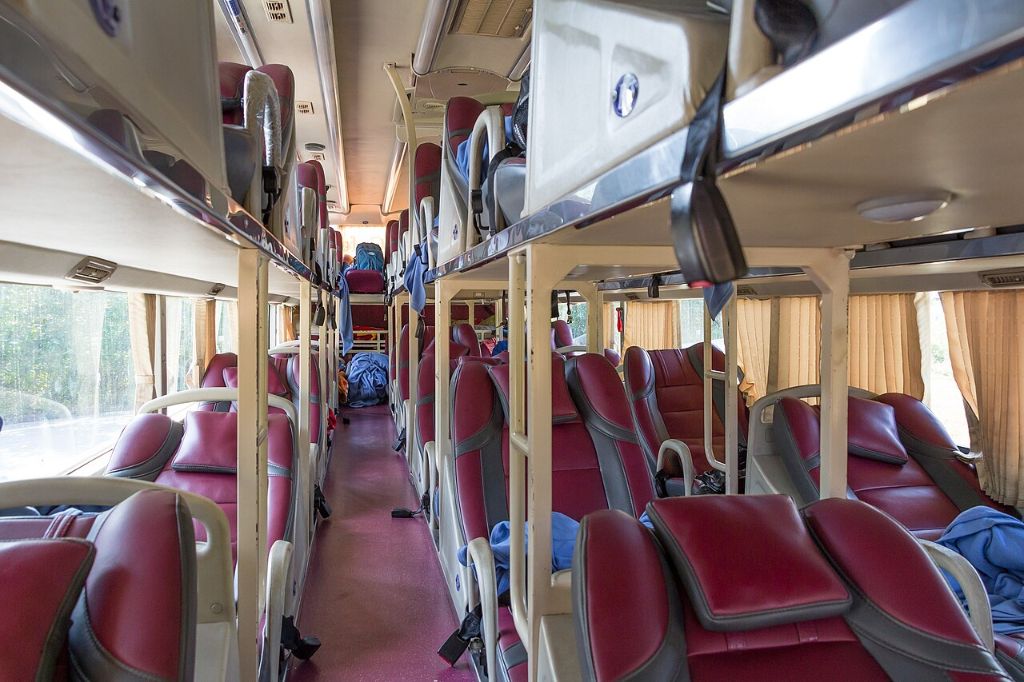
Vietnamese long-distance buses have moved a long way from the old upright coach. The main types you will see when booking are:
- Sleeper bus (giường nằm): around 40 reclining berths in two levels and three rows. Fine for adults of average height; tall travelers find the berths short.
- Cabin or “VIP” bus: fewer berths, each in its own curtained compartment, sometimes sold as single or double cabins. More privacy and a little more length.
- Limousine van: a 22-seat vehicle with wide reclining seats. Faster to load and often runs directly to smaller towns such as Cam Ranh.
Where buses leave from in Saigon
Pickup points vary by operator. Listings for the Nha Trang route include the old Mien Dong Bus Station (Bến xe Miền Đông) in Bình Thạnh, the New Mien Dong Bus Station (Bến xe Miền Đông Mới) in Thủ Đức, Mien Tay Bus Station (Bến xe Miền Tây) and An Suong Bus Station (Bến xe An Sương), as well as company offices in the central districts (as of November 2026). The new Mien Dong station is a long way from the backpacker and hotel areas, so check the exact pickup address before you choose a ticket on price alone.
Futa Bus Lines, better known as Phuong Trang (Phương Trang), is the largest operator and lists the Saigon–Nha Trang route from 200,000 VND one way on its double-cabin limousine service (as of November 2026), with fares rising at peak holiday periods. A direct Phuong Trang service to Cam Ranh is not clearly listed, so ask where the bus stops if you book with them. The Sinh Tourist also runs between its offices in Ho Chi Minh City and Nha Trang four times a day, according to a route planner.


Photos: 1) Ilya Plekhanov, CC BY-SA 4.0; 2) Tobias b köhler, CC BY-SA 3.0; 3) ASM~viwiki, CC BY-SA 3.0; via Wikimedia Commons.
Buses that go directly to Cam Ranh
Several smaller operators run straight to Cam Ranh Bus Station (Bến xe Cam Ranh) at 1 Lê Duẩn in Cam Ranh town. The fares below come from reference listings published in mid-2025, so treat them as a guide and confirm when you book:
- Phúc An Express, 22-seat limousine: about 380,000 VND
- Thiện Trí Limousine, 22-seat limousine: about 200,000 to 350,000 VND
- Hà Linh Limousine, 22-seat limousine: about 280,000 to 350,000 VND
- Trà Lan Viên, 40-berth sleeper: about 300,000 to 350,000 VND
- Nam Hải Limousine: listed from about 11.46 US dollars with a District 1 pickup and departures between 08:00 and 22:20 (as of November 2026)
Keep in mind that Cam Ranh town is on the mainland side of the bay, south of the airport, while the Bai Dai resorts are out on the peninsula. A direct bus saves you the backtrack from Nha Trang, but you will still need a taxi for the final stretch. Buses that continue to Nha Trang pass along the highway and some will let passengers off on request; ask the operator at booking and do not assume it.
Useful Vietnamese
- Cho tôi xuống ở Cam Ranh – Please let me off in Cam Ranh.
- Xe này có dừng ở Cam Ranh không? – Does this bus stop in Cam Ranh?
- Giường nằm – sleeper berth; ghế ngồi – seat.
- Nhà ga số ba – Terminal 3; ga quốc nội – domestic terminal.
- Bao nhiêu tiền? – How much is it?
How long does the drive take on the expressway?
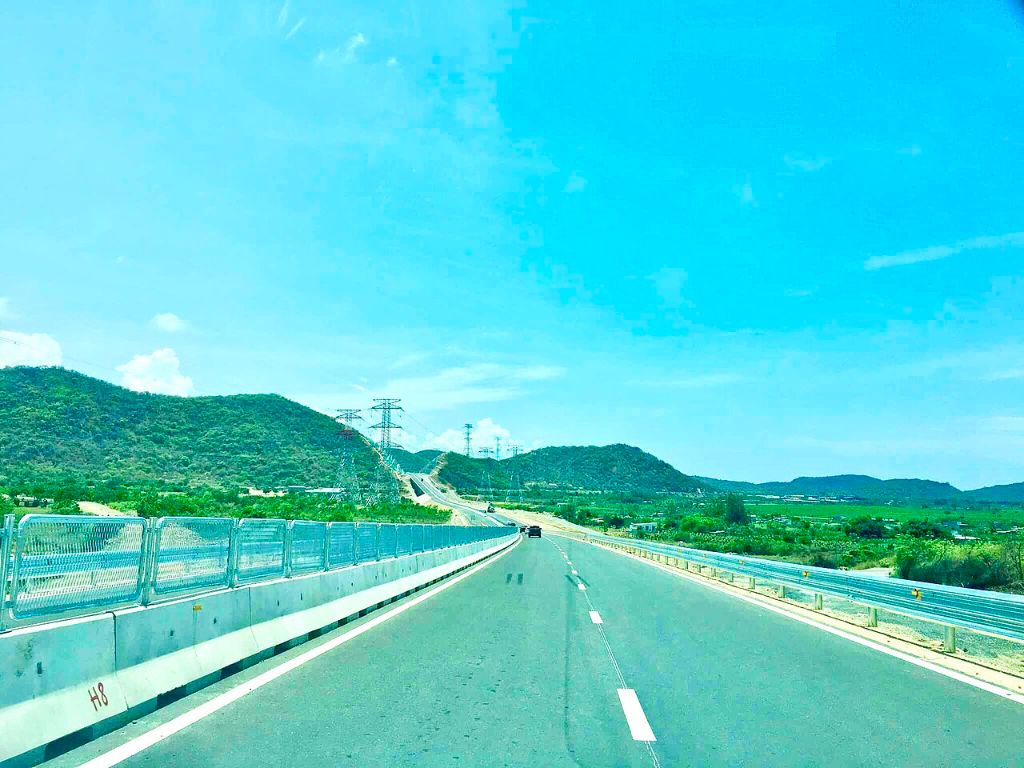
Plan on about 5 to 6 hours by car from central Saigon to Cam Ranh. The North–South Expressway has been continuous between Ho Chi Minh City and Nha Trang since the 78.5 km Cam Lam–Vinh Hao (Cam Lâm–Vĩnh Hảo) section opened on April 26, 2024, and news reports at the opening described a five-hour run to Nha Trang. Private transfer listings for the full route quote anything from 4 hours 45 minutes to 7 hours 30 minutes (as of October 2026), which reflects how much the first hour out of the city can vary.
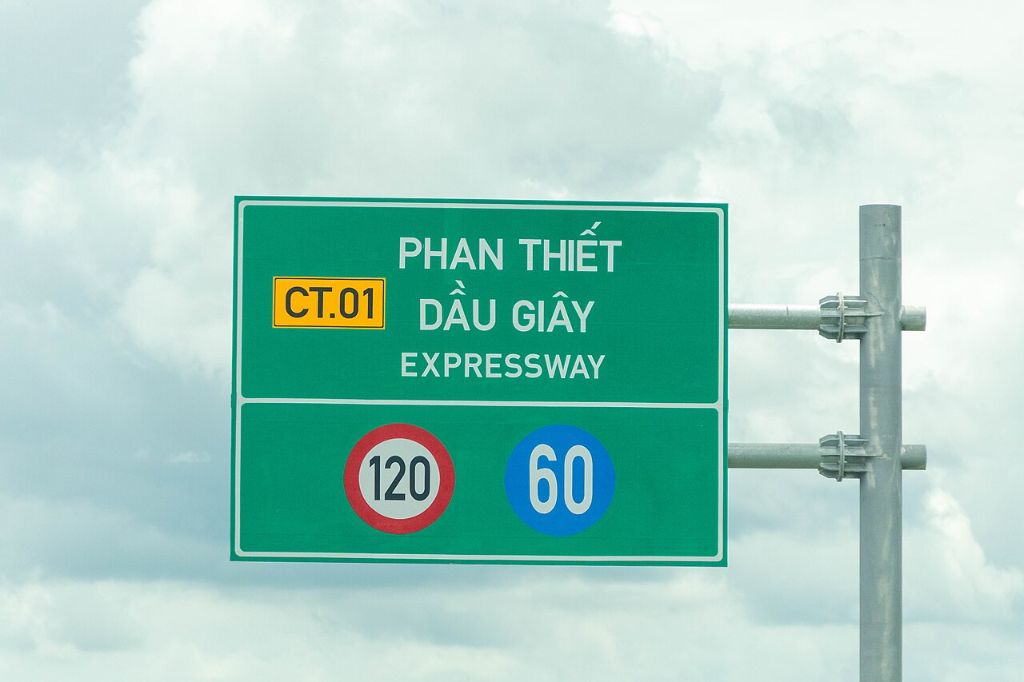
The route is a chain of separately managed sections. From the city you take the Ho Chi Minh City–Long Thanh–Dau Giay expressway, then Dau Giay–Phan Thiet (about 99 km), Phan Thiet–Vinh Hao (about 100 km) and Cam Lam–Vinh Hao (78.5 km). For Cam Ranh you leave the expressway around Cam Lam, so you need little or none of the final Nha Trang–Cam Lam section. Online route planners give the distance as roughly 340 to 380 km depending on your start and end points.
Tolls
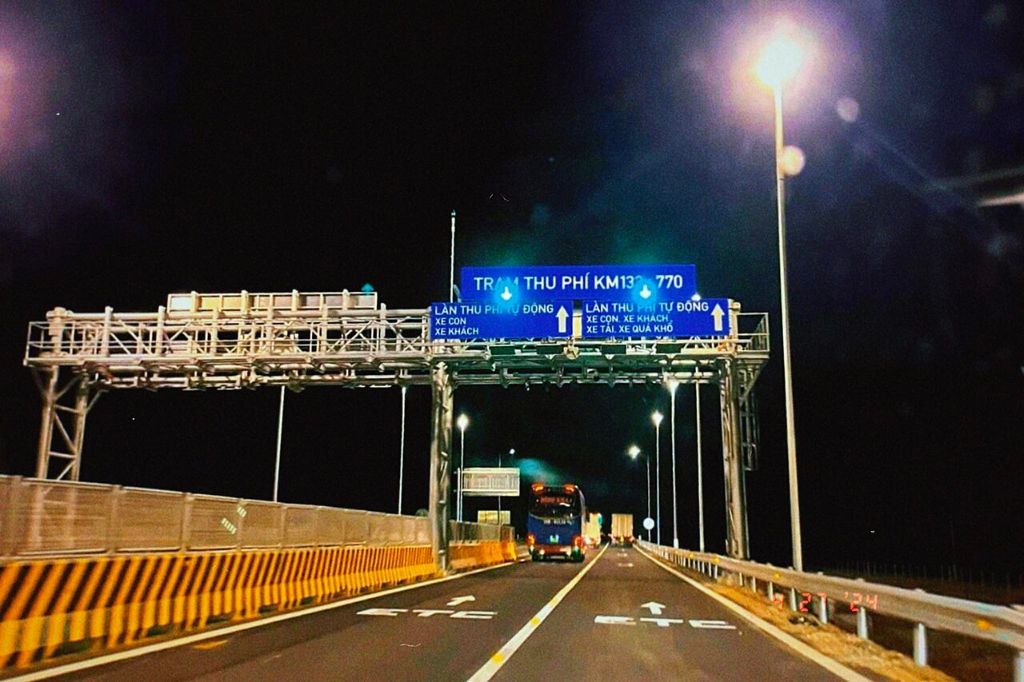
Every section now charges a toll, collected electronically only, so the vehicle needs an active ETC tag. For a standard car with fewer than 12 seats:
- Dau Giay–Phan Thiet: about 128,700 VND for the full section. Tolls began on March 2, 2026; the road had been free before that.
- Phan Thiet–Vinh Hao: about 90,000 VND, also tolled since March 2, 2026.
- Cam Lam–Vinh Hao: 130,000 VND for the full section (as of August 2025).
- Nha Trang–Cam Lam: about 82,000 VND for the full 49 km (as of July 2025), only relevant if you continue north.
That adds up to about 350,000 VND from Dau Giay to Cam Lam, plus the toll on the first section out of Ho Chi Minh City, which depends on where you join it. If you hire a car with a driver, ask whether tolls are included in the quote. A private car or van between Ho Chi Minh City and Nha Trang was listed from 2,590,000 VND per vehicle (as of October 2026), which is competitive with four or five plane tickets once baggage fees and airport taxis are counted.
Self-driving is rarely practical for visitors, since foreign licenses have limited recognition in Vietnam. A car with a driver is the normal arrangement, and it gives you the freedom to stop for lunch in Phan Thiet or at the sand dunes and salt fields that line the southern end of Khanh Hoa.
Photos: 1) Letrieuvy2002, CC BY-SA 4.0; 2) Letrieuvy2002, CC BY-SA 4.0; 3) MinhVN123, CC BY-SA 4.0; via Wikimedia Commons.
How do you get from the airport or station to Bai Dai?
From Cam Ranh airport it is a short taxi or Grab ride; from Nha Trang Station it is a longer one of roughly 35 to 45 minutes. The resort strip runs along the coastal road between the airport and Nha Trang, so anything described as “Bai Dai” or “Long Beach” is between 3 and 15 km from the terminal, about 15 to 20 minutes (as of July 2026).
| From | To | Option | Time | Price (as of Jul–Oct 2026) |
|---|---|---|---|---|
| Cam Ranh airport | Bai Dai resorts and villas | Taxi, Grab or Xanh SM | 15–20 min | About 100,000–200,000 VND |
| Cam Ranh airport | Bai Dai resorts | Resort shuttle (where offered) | 15–20 min | Free to about 150,000 VND |
| Cam Ranh airport | Nha Trang center | Metered taxi | 40–55 min | About 350,000–500,000 VND |
| Cam Ranh airport | Nha Trang center | Grab | 40–55 min | About 300,000–450,000 VND |
| Cam Ranh airport | Nha Trang center | Airport bus (fixed stops) | 60–75 min | About 50,000–65,000 VND; confirm on the day |
| Nha Trang Station | Bai Dai | Taxi or Grab | About 35–45 min | Expect a fare similar to the airport–Nha Trang run |
A few details behind the numbers. Xanh SM, the electric taxi brand, is reported to run 10 to 20% below metered taxis on the airport run (as of October 2026). Grab works at the airport, but pickup can be inconsistent, availability drops after about 23:00 and drivers sometimes cancel airport requests. The airport bus is the budget choice into Nha Trang, yet sources disagree on the details: one gives about 65,000 VND and 60 to 75 minutes, another describes Bus 18 at about 50,000 VND with no luggage hold and no published timetable. It drops at fixed points in the city and is of little use for Bai Dai, since it does not serve individual resorts.
Once you are settled on the peninsula, getting around takes a little planning. The resorts and villas are spread along the highway, ride-hailing between them is unreliable, and most dining and nightlife is in Nha Trang. A taxi called by your host, a resort shuttle or a rented scooter (from about 150,000 VND a day, as of July 2026) are the dependable options. Our Cam Ranh travel guide covers the area in more detail, and if you are still choosing a base, our comparison of Cam Ranh vs Nha Trang explains how the two differ.
Local tip: Agree on the fare, or confirm the meter is running, before the car pulls away from the terminal. Airport desk taxis quote fixed prices to Nha Trang, and those prices can be higher at night (as of July 2026).
When is the best time to make the trip?
January to April is the best window, with dry weather and a calm sea, and May to August is also good and has the warmest water. The coast around Cam Ranh follows a different rhythm from Saigon: when the south is in its rainy season from May onward, Cam Ranh is mostly dry, and when Saigon dries out late in the year, Cam Ranh gets its rain.
The pattern, according to a climate summary updated in July 2026:
- January to August: dry season with little rain. Sea temperature runs 25 to 29 °C and is warmest from May to August.
- September: a transition month with around 200 mm of rain, mostly in short showers.
- October to December: rainy season. October brings about 250 mm, November about 300 mm over roughly 10 rainy days, and December about 145 mm.
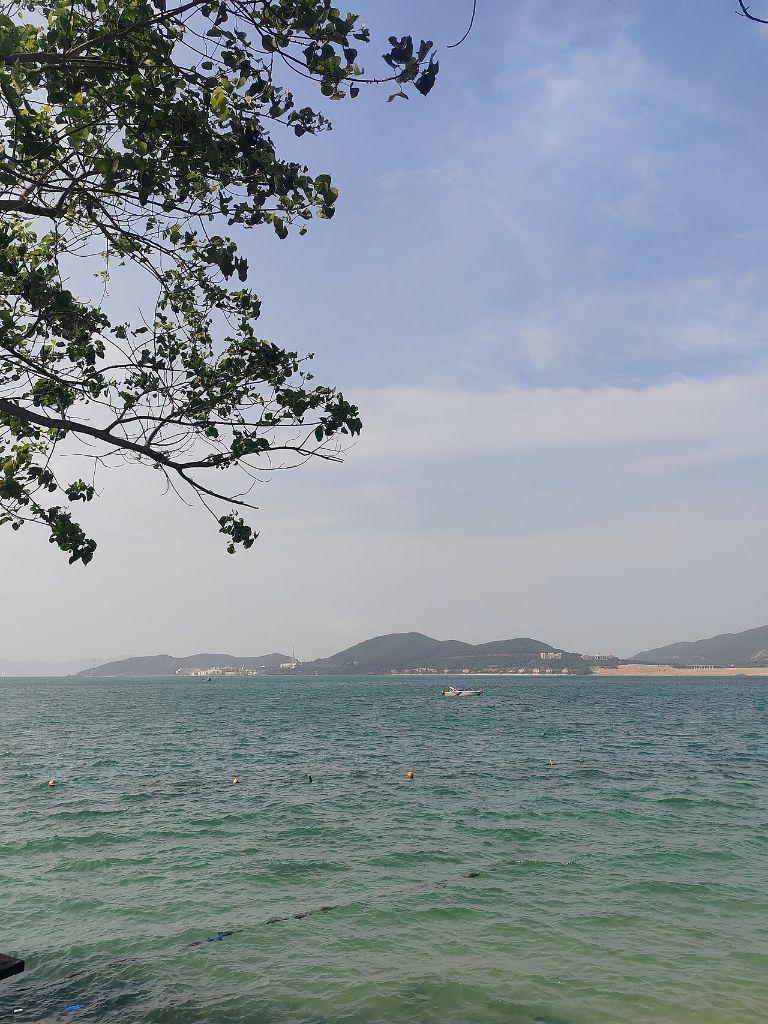
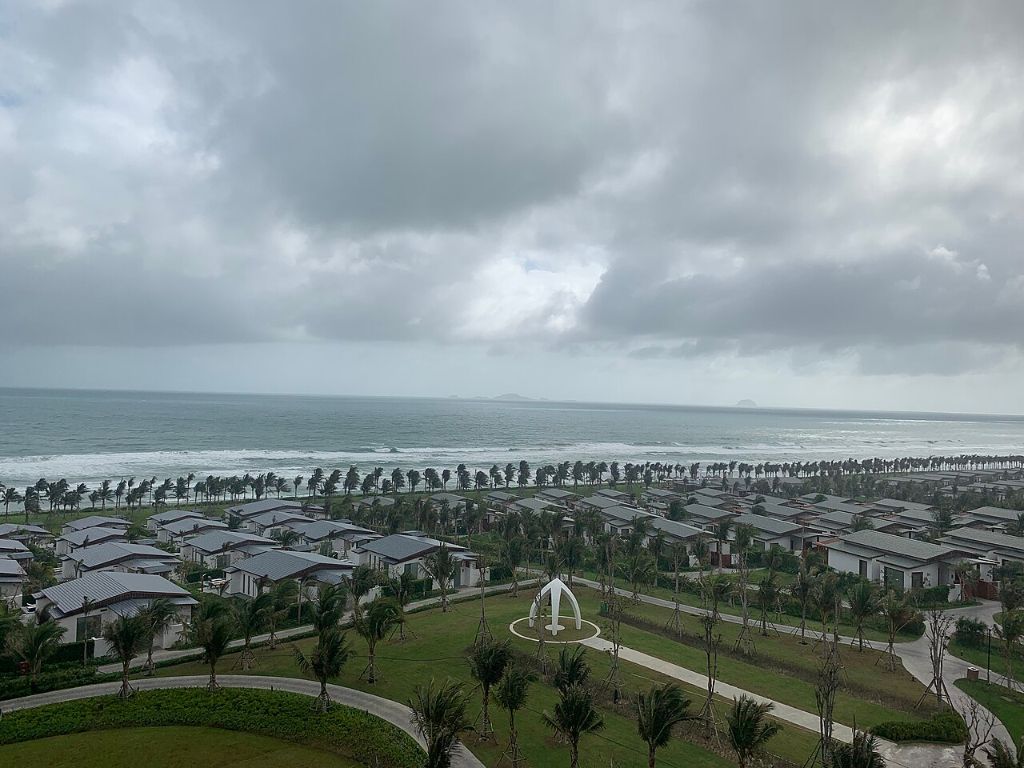
A late-year trip is still possible, but plan for some wet days and keep indoor options in mind. Typhoon risk is highest in October and November, although direct hits on Cam Ranh are rare. The open beaches of Bai Dai can see higher waves in the rainy season than the more sheltered bay at Nha Trang, which is one reason a villa with its own pool makes sense for a November or December stay.
Season also affects how you travel. Flights can be delayed when a storm system passes, and night buses are less comfortable on wet roads, so build some slack into connections between October and December. Around Tet (Lunar New Year) and other national holidays, transport in every category sells out early and bus operators raise their fares. If your dates fall near a holiday, book the transport first and the rest of the trip around it.


Photos: 1) Bolyvn at vi.wikipedia, public domain; 2) Huangdan2060, CC BY 4.0; 3) Martin Lewison from Forest Hills, NY, U.S.A., CC BY 2.0; 4) nguyenquoctuan, CC BY-SA 3.0; via Wikimedia Commons.
Which option should you pick?
Pick the flight unless you have a specific reason not to: it is the only option that lands you on the peninsula, and with a bag included it often costs little more than a 4-berth train ticket. The reasons to choose something else are real, though, and they depend on who is traveling.
Families with children
Fly. A 70-minute flight followed by a 15 to 20 minute car ride is far easier on small children than any 8-hour alternative. Choose a fare that includes checked luggage, aim for a late-morning departure so you arrive around check-in time, and arrange a car large enough for the whole group and its suitcases. Larger families of six or more should also price a private van, which removes the airport steps altogether and lets you stop when someone needs a break.
Budget travelers
Take a sleeper or cabin bus. At roughly 280,000 to 450,000 VND (as of October 2026) it costs less than the cheapest flight once baggage is added, and traveling overnight saves a night of accommodation. Look for a limousine van that runs directly to Cam Ranh if your stay is on the peninsula, since it avoids paying for a taxi all the way back from Nha Trang. The soft seat on a daytime train is the other low-cost choice and is the more comfortable of the two if you would rather not sleep on a bus.
Couples with little time
Fly, and take the first sensible flight of the day. On a three or four night break, the plane gives you most of the arrival day on the beach, where the train or bus would use it up entirely. If the journey is meant to be part of the holiday, the private sleeper carriages on SNT2 are the romantic alternative: board after dinner in Saigon, wake up in Nha Trang, and reach Bai Dai in time for breakfast if your car is waiting.
Groups of friends
Compare a private van with flying. From 2,590,000 VND per vehicle (as of October 2026) plus tolls, a van split between six or seven people is close to bus prices, runs on your schedule and takes you to the villa gate.
Travelers who dislike flying or long road trips
Take a daytime train such as SE66 or SE22. You get a table, a window and room to walk around, and the line runs close to the coast for part of the way north of Phan Thiet. Accept that the last leg from Nha Trang Station will be by car.
Booking checklist before you leave Saigon
A few minutes of checking the day before saves most of the problems travelers run into on this route. Work through the list that matches your transport.
- Flight: confirm the departure terminal at Tan Son Nhat on your e-ticket, confirm what baggage your fare includes, and add any extra bags online.
- Train: check that the ticket says Nha Trang, not a station in Cam Ranh, and note the carriage and berth numbers. Arrange the onward car if you arrive before dawn.
- Bus: confirm the exact pickup address in Saigon and whether the bus ends in Cam Ranh town or Nha Trang. Save the operator’s phone number.
- Private car: ask whether expressway tolls are included and confirm the vehicle has an active electronic toll tag.
- All options: tell your host your arrival time and where you are arriving, because “Cam Ranh airport”, “Cam Ranh bus station” and “Nha Trang Station” are three very different pickup points.
Addresses deserve a second look as well. Since the province mergers of July 1, 2025, Cam Ranh is part of an enlarged Khanh Hoa province that also takes in the former Ninh Thuan, and ward and commune names across the area were reorganized at the same time. Booking sites, older maps and drivers may still use the previous names, so share a map pin with your driver instead of relying on a written address.
Know how you are getting here and need a place to stay? Tell us your dates and the size of your group, and we will confirm availability for our private pool villas on Bai Dai. Share your flight, train or bus arrival time and we can advise on the best timing for an airport pickup.
Frequently Asked Questions
How far is Saigon from Cam Ranh?
Saigon is roughly 340 to 380 km from Cam Ranh by road, depending on where you start and finish. The railway distance from Saigon Station to Nha Trang Station, about 49 km beyond Cam Ranh, is 411 km. By air the flight takes about 1 hour 10 minutes, and by expressway the drive takes around 5 to 6 hours (as of November 2026).
Is there a direct flight from Ho Chi Minh City to Cam Ranh?
Yes, there are several direct flights every day between Tan Son Nhat (SGN) and Cam Ranh (CXR). Vietnam Airlines and Vietjet both fly the route, and Vietnam Airlines alone lists 3 to 4 daily flights (as of November 2026). Bamboo Airways appears in some listings, so check current schedules if you prefer that airline. The flight takes about 1 hour 10 minutes.
How much does a flight from Saigon to Cam Ranh cost?
Expect roughly 600,000 to 2,000,000 VND one way in economy, with higher prices at peak dates. Vietnam Airlines showed fares from about 870,000 VND for late November 2026 (as of November 2026). Low-cost fares often exclude checked luggage, and adding 20 kg on Vietjet costs about 180,000 to 350,000 VND online (as of October 2026), so compare total prices.
Is there a train station in Cam Ranh?
No, there is no station in Cam Ranh that handles passengers. Nga Ba Station, on the main line in Cam Ranh, is now used only for technical railway operations. Travelers take the train to Nha Trang Station, 411 km from Saigon, and continue by taxi or pre-booked car for roughly 35 to 45 minutes to reach the Bai Dai area on the Cam Ranh peninsula.
How long is the train from Saigon to Nha Trang?
The train takes between 7 hours 9 minutes and 9 hours 55 minutes, depending on the service. The timetable checked in October 2026 showed 12 trains a day, including daytime SE trains such as SE66 (08:45 to 16:06) and overnight SNT trains such as SNT4 (22:15 to 06:30). Schedules change during the year, so confirm times before you book.
Is there a direct bus from Saigon to Cam Ranh?
Yes, several limousine van and sleeper bus operators run directly to Cam Ranh Bus Station in Cam Ranh town. Reference fares published in mid-2025 ranged from about 200,000 to 380,000 VND, and should be confirmed when you book. Many more buses run to Nha Trang, with over 350 daily departures listed on one platform (as of October 2026) and journey times of 6.5 to 9 hours.
Which terminal at Tan Son Nhat do Cam Ranh flights use?
It depends on your airline. Vietnam Airlines and Bamboo Airways domestic flights use Terminal 3, which opened in April 2025, while Vietjet continued to use Terminal 1 (as of August 2025). Because assignments have changed since Terminal 3 opened, check your e-ticket or the airline’s app the day before departure and tell your driver the terminal number.
How do I get from Cam Ranh airport to Bai Dai beach?
Take a taxi, Grab or Xanh SM car, which costs about 100,000 to 200,000 VND and takes 15 to 20 minutes (as of July 2026). The resorts and villas along Bai Dai are 3 to 15 km from the terminal. Some resorts run shuttles for free or for up to about 150,000 VND. The public airport bus goes to Nha Trang and does not serve individual properties.
How much is a taxi from Cam Ranh airport to Nha Trang?
A metered taxi to central Nha Trang costs about 350,000 to 500,000 VND and takes 40 to 55 minutes for the 35 km trip (as of October 2026). Grab is usually a little cheaper at about 300,000 to 450,000 VND, and the electric Xanh SM taxis are reported to run 10 to 20% below metered fares. Prices can be higher late at night.
How long does it take to drive from Saigon to Cam Ranh?
Allow about 5 to 6 hours by car. The North–South Expressway has been continuous from Ho Chi Minh City to Nha Trang since April 2024, and private transfer listings quote 4 hours 45 minutes to 7 hours 30 minutes for the full route (as of October 2026). Traffic leaving the city is the main variable. Car tolls from Dau Giay to Cam Lam total about 350,000 VND.
What is the cheapest way to get from Saigon to Cam Ranh?
The bus is the cheapest way. VIP cabin buses to Nha Trang were listed from 280,000 VND and sleeper buses from 320,000 VND (as of October 2026), and Phuong Trang lists the route from 200,000 VND (as of November 2026). A soft seat on the train from about 440,000 VND through an agent is the next cheapest. Fares rise around Tet and public holidays.
Is Cam Ranh in Khanh Hoa or Ninh Thuan?
Cam Ranh is in Khanh Hoa province. Since July 1, 2025, Khanh Hoa and the neighboring Ninh Thuan province have been merged into a single, larger Khanh Hoa province, which now has the longest coastline in Vietnam and covers more than 8,500 square kilometers. Local ward and commune names were reorganized at the same time, so older addresses may differ from current ones.
Sources
- Tuoi Tre News: Tan Son Nhat’s new T3 terminal to host five domestic carriers
- AeroRoutes: Sun PhuQuoc Airways July 2026 domestic network additions
- Dan Tri International: Expressway linking HCM City and Nha Trang opens
- Deo Ca Group: Cam Lam–Vinh Hao expressway, first year of operation
- Khanh Hoa News: Khanh Hoa tourism after the merger
- Vietnamtourism.com: Ho Chi Minh City–Nha Trang timetable, checked October 21, 2026
Featured photo: L.K.Phung, CC BY-SA 4.0, via Wikimedia Commons.

Bài viết liên quan

The Tudors at Greenwich: Henry VIII’s Lost Palace of Placentia
The story of the Palace of Placentia, birthplace of Henry VIII, Mary I and Elizabeth [...]

Cam Ranh vs Nha Trang: Where Should You Stay?
Cam Ranh vs Nha Trang compared as of November 2026: beaches, airport transfers, food, nightlife, [...]

Cam Ranh Travel Guide: Beaches, Resorts and How to Get There
A practical Cam Ranh travel guide: how to get there from the airport, the best [...]

Hơn 8.000 m² Tiện Ích Ngoài Trời TT Genesis Được Quy Hoạch Ra Sao?
Hơn 8.000 m² tiện ích ngoài trời TT Genesis là một trong những điểm nhấn [...]

Dinh Thự The Collectors’ Được Bảo Hành Bao Lâu?
Dinh thự The Collectors’ được bảo hành trong thời hạn 24 tháng, tính từ khi [...]

Diện tích căn hộ TT Genesis chênh lệch khi bàn giao xử lý ra sao?
Diện tích căn hộ TT Genesis nếu có chênh lệch khi bàn giao sẽ được [...]

TT Genesis sở hữu lâu dài hay 50 năm?
Căn hộ TT Genesis áp dụng thời hạn sở hữu khác nhau theo từng nhóm [...]

Dòng Vốn Lớn Đổ Về Tây Nam TP.HCM – Dragon Eden Nằm Ở Đâu?
Bất động sản Tây Nam TP.HCM đang bước vào giai đoạn chuyển đổi đáng chú [...]