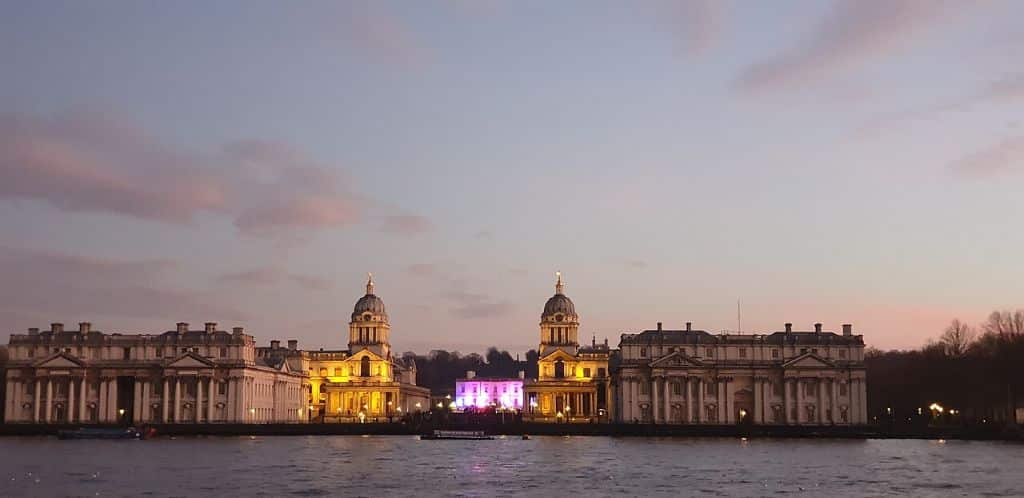
The Palace of Placentia in Greenwich was the favourite riverside palace of the Tudors and the birthplace of Henry VIII, Mary I and Elizabeth I. Almost nothing of it stands today: it decayed after the Civil War and its site is now covered by the Old Royal Naval College. You can still trace it, though, through excavated rooms under the Painted Hall, the free college grounds, the Queen’s House that once looked onto its gardens, and Greenwich Park, its former hunting ground.
- The palace began as Bella Court, a retreat built by Humphrey, Duke of Gloucester, in the 1430s. Margaret of Anjou renamed it Placentia, or Pleasaunce, after 1447.
- Henry VII rebuilt it as a new riverside palace from around 1500. Henry VIII was born there in 1491, Mary I in 1516 and Elizabeth I in 1533.
- The palace fell into disrepair during the English Civil War of the 1640s. From 1694 the site was given for the Royal Hospital for Seamen, designed by Christopher Wren, now the Old Royal Naval College.
- The Old Royal Naval College grounds are open daily from 08:00 to 23:00 and are free. The Chapel is free. The Painted Hall, Chapel and Visitor Centre open daily from 10:00 to 17:00 (last entry 16:30), with listed exceptions: the Painted Hall closes from 15:00 on Tuesday 24 November and all day from 24 to 26 December 2026 (ORNC opening times and closures, checked 23 November 2026).
- General admission to the Painted Hall is £19 for adults; children aged 16 and under go free with a paying adult.
- Excavations in 2017 uncovered two service rooms of the Tudor-era friary buildings, which you can see beneath the Painted Hall.
- The Queen’s House is free but needs a ticket. It opens daily from 10:00 to 17:00 and is closed from 24 to 26 December.
This guide is for visitors interested in royal London who want more from Greenwich than a quick look at the Cutty Sark. It explains what the Palace of Placentia was, why it mattered so much to the Tudors, what you can actually see of it now, and how to plan a half-day that follows the palace from the riverside to the top of the park. It also helps you decide whether the paid Painted Hall ticket is worth it if your main interest is the Tudors rather than the later naval hospital. We run villas by the sea in Cam Ranh, Vietnam, and write about London as careful visitors, not as Londoners, so every opening time and price is linked to the organisation that sets it.
What was the Palace of Placentia?
The Palace of Placentia was a royal palace on the south bank of the Thames at Greenwich, used by English monarchs from the fifteenth century until the mid-seventeenth century. For the Tudors it was the principal palace outside central London, and for much of Henry VIII’s reign it was as important as Whitehall or Hampton Court.
The story starts with Humphrey, Duke of Gloucester, the younger brother of Henry V. In the 1430s he built a riverside house called Bella Court and enclosed the land behind it as a park. The Old Royal Naval College’s history of Greenwich Palace explains that Humphrey was arrested for treason in 1447 and died in custody, after which Margaret of Anjou, the wife of Henry VI, took the house over, renamed it the Palace of Placentia, or Pleasaunce, and spent several years improving it (checked 23 November 2026). The name means “the pleasant place”, and it stuck long after the building itself had been replaced.
The Tudor palace that most people mean today was largely the work of Henry VII. From around 1500 he pulled down much of the older building and put up a new brick palace facing the river, with royal apartments along the waterfront, a chapel and kitchens, and courtyards running back towards the park. Contemporary drawings, such as the panorama by the Flemish artist Anthonis van den Wyngaerde in the 1550s, show a long, many-windowed riverfront with towers and a landing stage, built to be seen from the water as much as from the land.
Being on the river was the whole point. The Thames was the fastest road in Tudor England, and Greenwich was a short barge ride from Westminster and the Tower of London. It was also close to the royal dockyards that Henry VIII developed at Deptford and Woolwich, which helps explain why a king so interested in his navy spent so much time there.
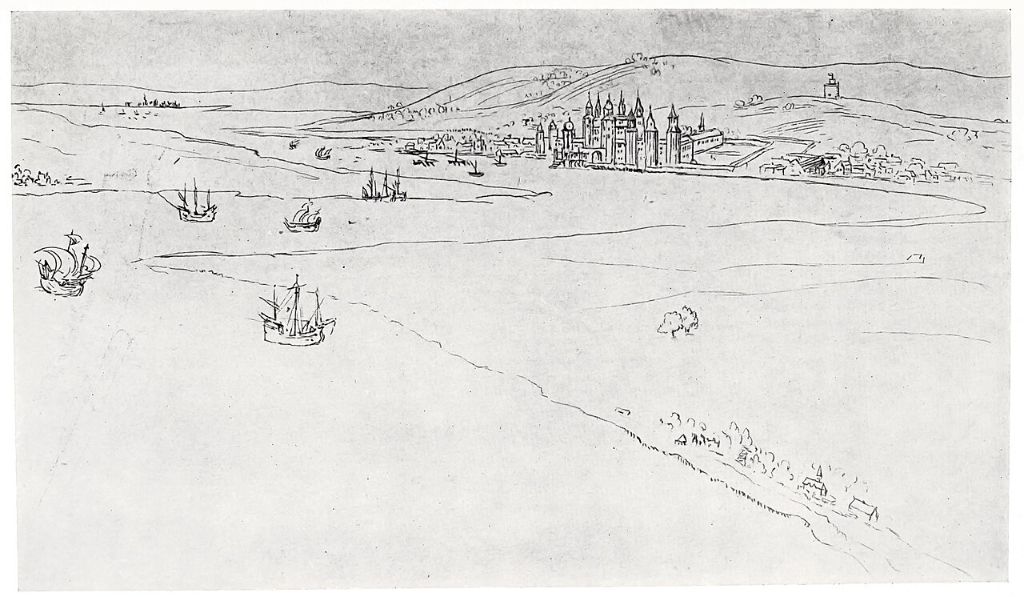
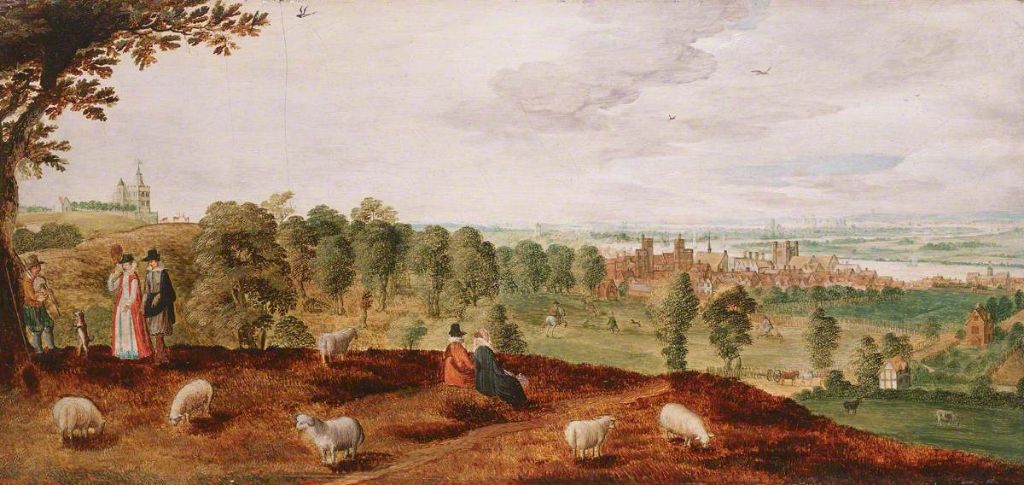
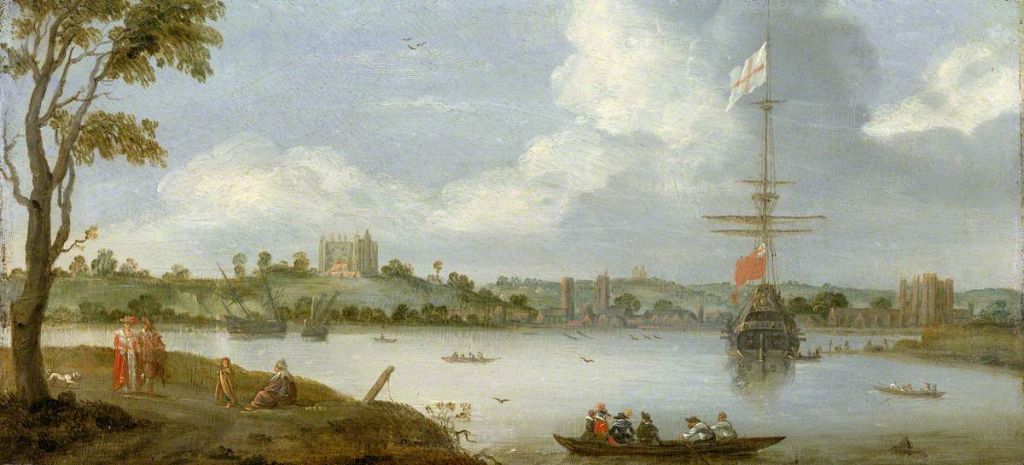
Images: 1) Anthonis van den Wyngaerde, public domain; 2) unknown English artist, about 1620, Royal Museums Greenwich, public domain; 3) Netherlandish School, Royal Museums Greenwich, public domain; via Wikimedia Commons.
Why did the Tudors love Greenwich so much?
The Tudors loved Greenwich because it combined everything a Tudor court wanted in one place: a river for travel and display, a park for hunting and jousting, and enough distance from the crowded City to feel like a country retreat. It was also, for Henry VIII and his daughters, simply home, the place where they were born.
Royal births at Greenwich
Three Tudor monarchs were born at Greenwich. Henry VIII was born there in June 1491, as the second son of Henry VII, when no one expected him to become king. His daughter Mary, the future Mary I, was born there in February 1516, the only surviving child of his marriage to Catherine of Aragon. His second daughter, Elizabeth, the future Elizabeth I, was born there in September 1533 to Anne Boleyn. The Old Royal Naval College describes the site as the birthplace of all three, and it is the strongest reason the palace still matters to royal history today.
Marriages, feasts and tournaments
Greenwich was also a stage for royal ceremony. Henry VIII married Catherine of Aragon at Greenwich in 1509, shortly after he became king, and he married his fourth wife, Anne of Cleves, there in 1540. The palace hosted Christmas and May Day celebrations, masques and banquets, and the tiltyard beside it was one of the main places where the young Henry showed off as a jousting champion. Under Elizabeth I the court spent long periods at Greenwich, and the Old Royal Naval College notes that Shakespeare’s company performed at her court there over Christmas 1594.
Not every famous moment there was happy. Henry VIII’s sickly son, Edward VI, died at Greenwich in 1553, and Anne Boleyn was arrested after a May Day joust at Greenwich in 1536, shortly before her execution. Visiting with that history in mind makes the quiet college lawns feel very different.
The park as a royal playground
Greenwich Park was the palace’s private hunting ground, stocked with deer and laid out for royal riding. The Royal Parks describes it as a park that welcomed Tudor monarchs, among others, and its pedestrian gates currently open from 06:00 to 18:00 (checked 23 November 2026; gate times change with the season). The hill behind the palace gave the court a view over the river and the ships, much as it gives visitors a view over the college and Docklands today.
What happened to the palace?
The palace declined after the Tudors and was finally cleared away at the end of the seventeenth century. The Stuarts still used it, and James I’s queen, Anne of Denmark, commissioned the Queen’s House on the edge of its gardens in 1616. But the English Civil War of the 1640s ended Greenwich as a royal home. According to the Old Royal Naval College, the palace fell into disrepair during the war, when Parliament used parts of it for other purposes.
After the Restoration, Charles II planned to build a grand new palace on the site. Only one wing, known as the King’s House, was built, on the old palace foundations. In 1694, William III and Mary II gave the land by royal warrant for a hospital for injured and retired sailors, an idea associated especially with Queen Mary. Christopher Wren was commissioned to design the Royal Hospital for Seamen, and the remaining Tudor buildings disappeared beneath his courts and colonnades.
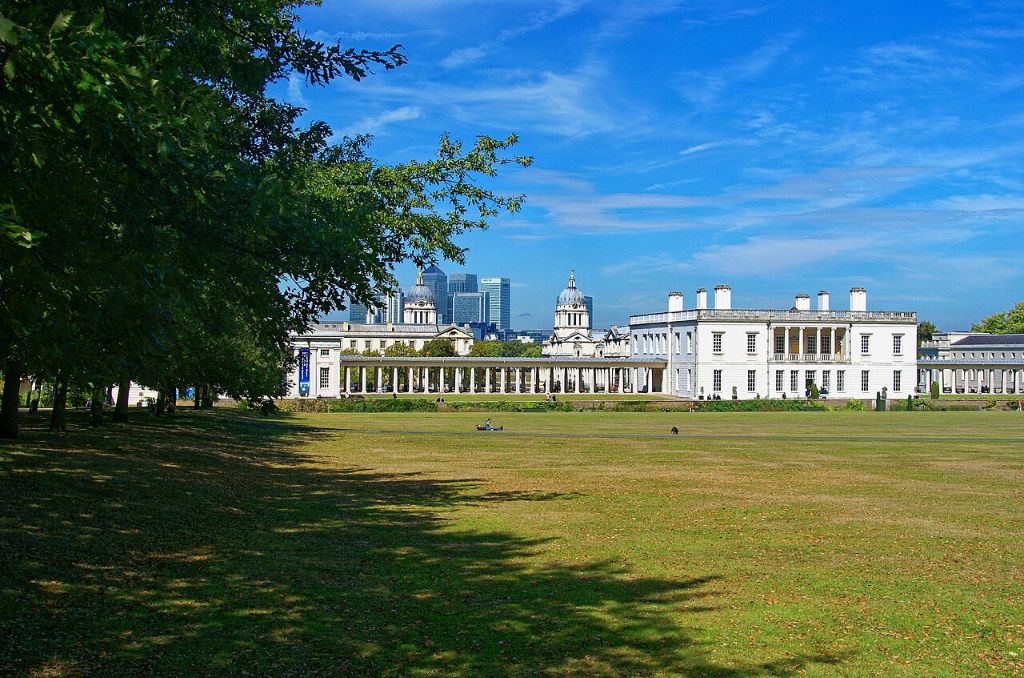
Wren’s design kept one feature of the earlier layout: a clear view from the river to the Queen’s House and the park. The hospital was built as two pairs of courts with a wide gap between them, so that the Queen’s House could still be seen from the Thames. Today’s skyline of twin domes with the white Queen’s House framed between them is, in that sense, a direct result of the palace that stood there before.
The hospital later became the Royal Naval College, from 1873 until the navy left in 1998, and the buildings are now run by the Old Royal Naval College trust and shared with the University of Greenwich and Trinity Laban. That long naval history is why many visitors walk through without realising that a Tudor palace once filled the same ground.
What can you still see of Placentia today?
You can still see buried rooms of the palace complex under the Painted Hall, the outline of its setting in the Old Royal Naval College grounds, its relationship to the Queen’s House, and its hunting park behind. None of it is a standing ruin, so the visit is about reading a landscape rather than walking through rooms.
The remains under the Painted Hall
The most direct link to the Tudor site is underground. The Old Royal Naval College says that excavations in 2017, carried out during work on the Painted Hall, uncovered two service rooms from the Friary buildings associated with the palace (the Observant Friars had a house beside it, founded under Henry VII). They are displayed beneath the Painted Hall. The lower room has small wall niches thought to have held beehives through the winter. It is a modest find, but it is real Tudor-period fabric, in place, on the palace site.
The college’s Explore What’s Here page lists “Greenwich Palace Remains” among the things to see and links them to the palace history (checked 23 November 2026). Ask at the Visitor Centre how to reach them on the day, because access routes inside the building can change during events and works.
The Painted Hall and Chapel
The Painted Hall is not Tudor. It is the hospital’s great dining hall, painted by James Thornhill in the early eighteenth century, and it is one of the most impressive interiors in Britain. It is worth the ticket for the hall alone, and the ticket is also how most visitors reach the undercroft where the palace story is told. The Old Royal Naval College Plan a Visit page lists general admission at £19 for adults, £9.50 for eligible concessions and free entry for children aged 16 and under, up to four per paying adult, with talks and tours included (checked 23 November 2026). The Painted Hall closes for events on a few dates, including from 15:00 on 24 November and all day from 24 to 26 December 2026, so look at the college’s opening times and closures page before you choose your day (checked 23 November 2026). The Chapel of St Peter and St Paul opposite is free, but it is also closed on some days, including 24 to 26 December apart from the Christmas Day service.
The same page notes that the Painted Hall lift was out of order when we checked, and it lists the number of steps to the undercroft and the hall. If anyone in your group has limited mobility, read that section before you go.
The grounds and the river view
The college grounds are free and open daily from 08:00 to 23:00, according to the same official page. Walk down to the riverside terrace to stand roughly where the Tudor royal apartments faced the Thames, then turn round and look up the central avenue towards the Queen’s House and the hill. That line of sight, river to house to park, is the best way to picture the palace in its setting.
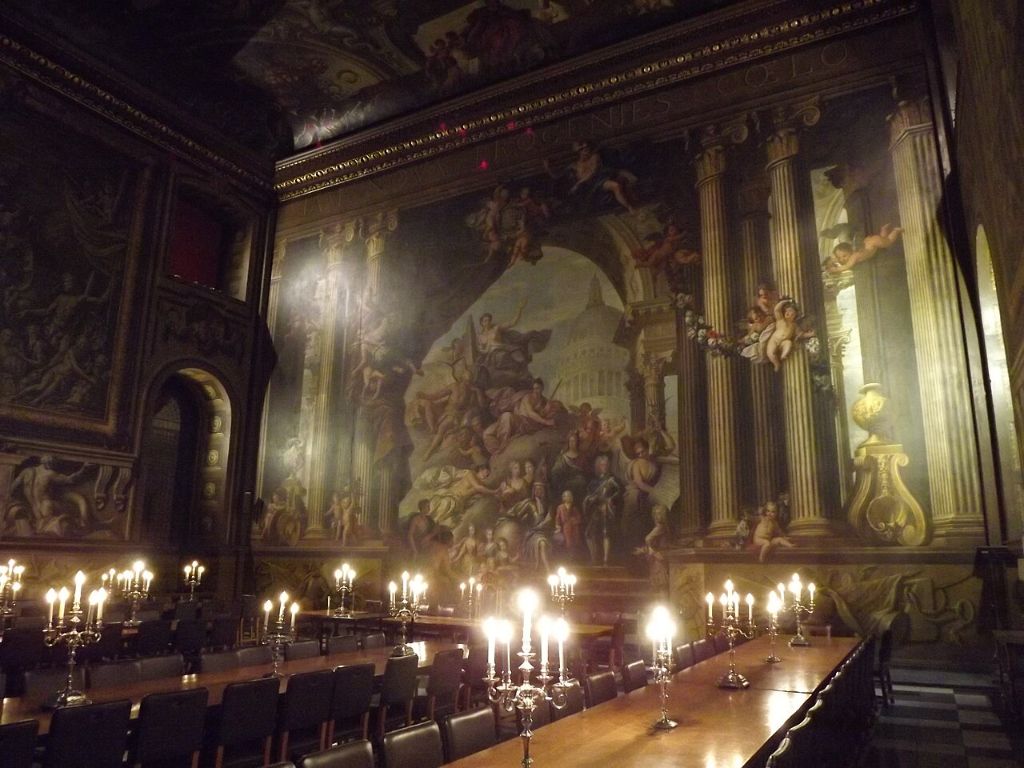
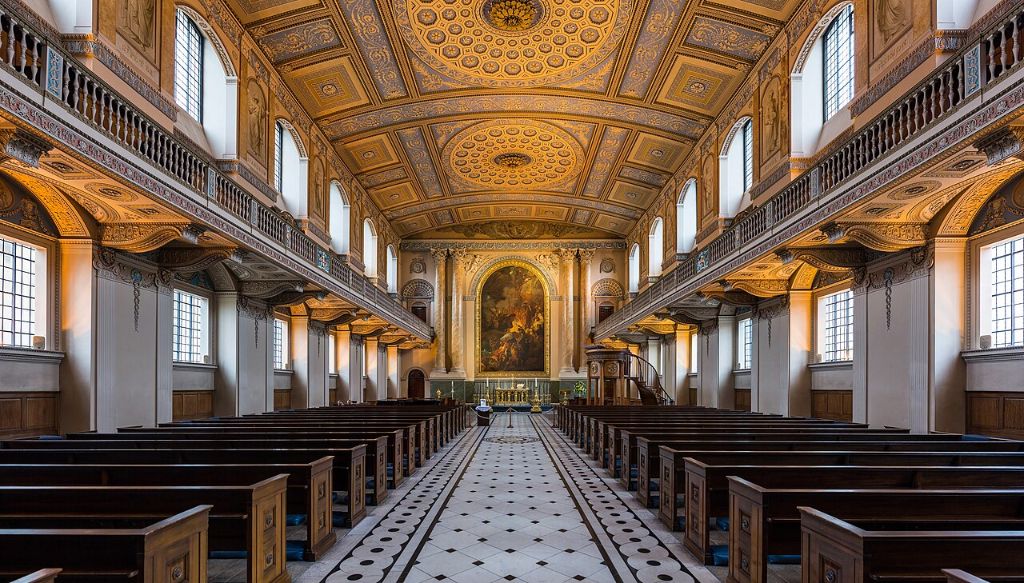
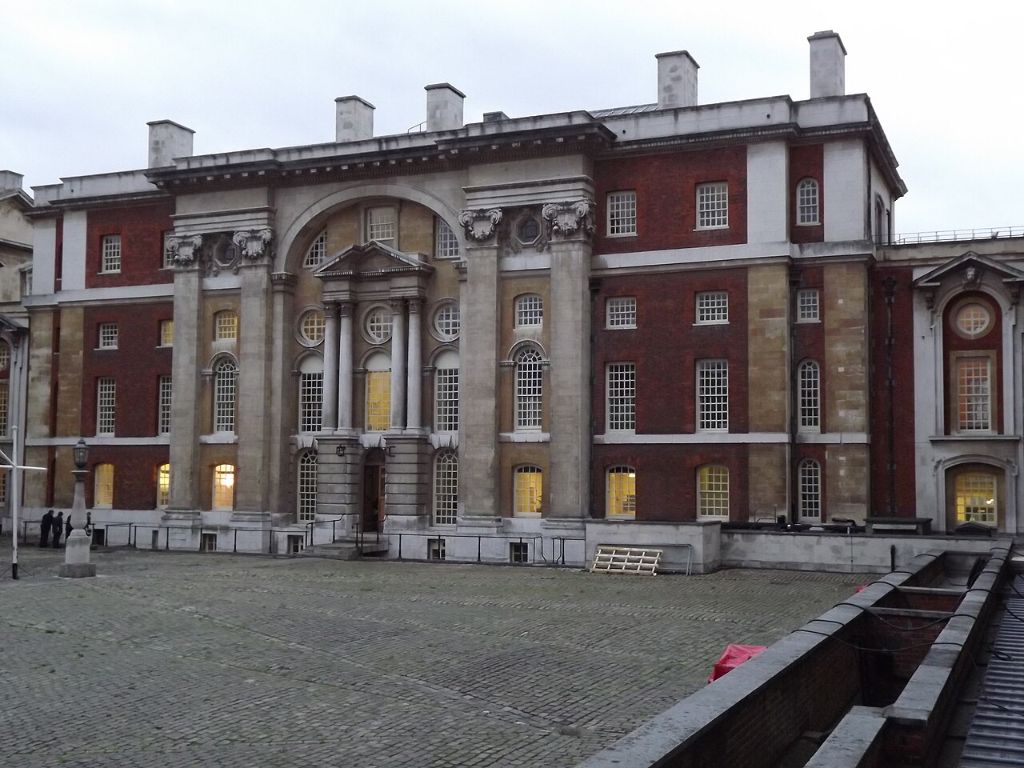
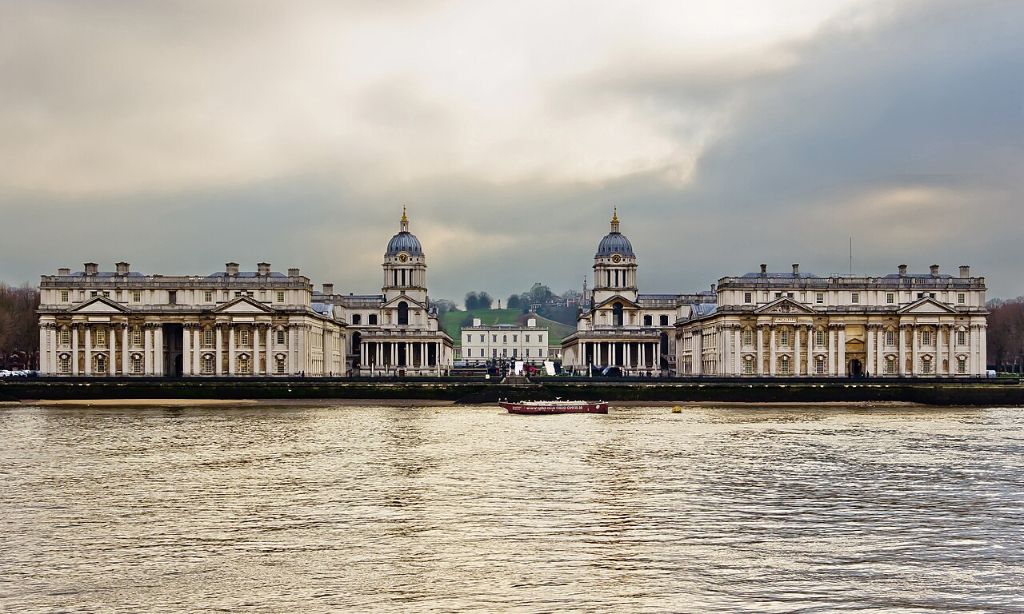
Photos: 1) Colin Smith, CC BY-SA 2.0; 2) Diliff, CC BY-SA 3.0; 3) Colin Smith, CC BY-SA 2.0; 4) Dmitry Tonkonog, CC BY-SA 3.0; via Wikimedia Commons and Geograph.
| Place | Nearest station or pier | Time to allow | Booking needed? | Could cost money |
|---|---|---|---|---|
| Old Royal Naval College grounds | Cutty Sark DLR; Greenwich Pier | 30–45 min | No | Nothing |
| Painted Hall and palace remains | Cutty Sark DLR; Greenwich Pier | 60–90 min | Online or at the Visitor Centre | £19 adult ticket |
| Chapel of St Peter and St Paul | Cutty Sark DLR | 15–20 min | No | Nothing |
| Queen’s House | Cutty Sark DLR or Greenwich | 45–60 min | Free ticket; booking recommended | Nothing for entry |
| Greenwich Park and Queen Elizabeth’s Oak | Greenwich or Maze Hill | 45–75 min | No | Nothing |
| Eltham Palace (optional extra) | Eltham or Mottingham | 2 hours | Check opening days | Paid entry |
Time to allow is the time you spend at each place, not the travel time between them.
If you want to add the non-royal sights, such as the Cutty Sark, the National Maritime Museum and Greenwich Market, our partner guide to things to do in London Greenwich covers the whole area, so you can fit the palace story into a fuller day.
How does the Queen’s House fit into the story?
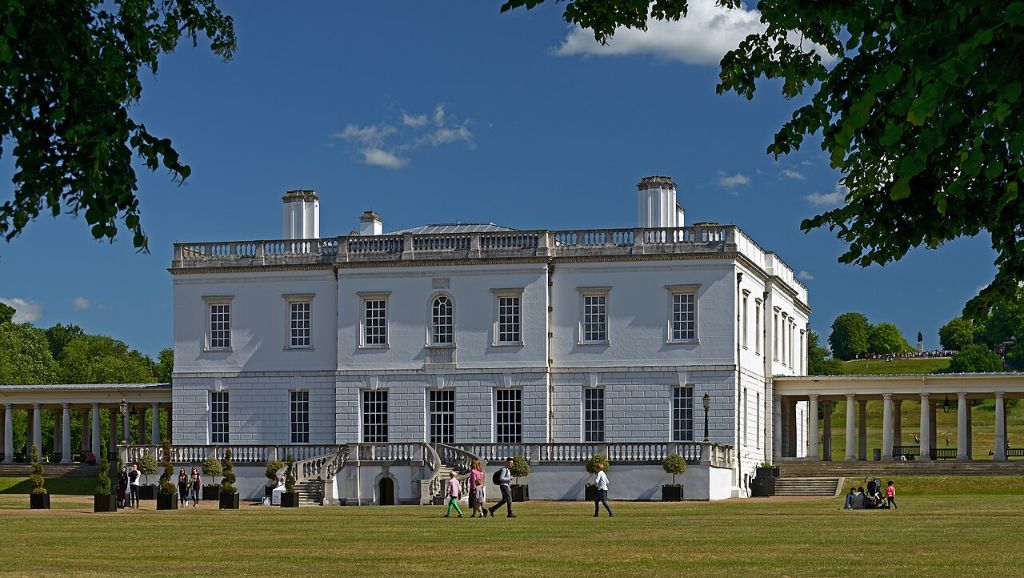
The Queen’s House fits into the Placentia story as the last royal building added to the palace estate before it was abandoned. It was begun in 1616 by the architect Inigo Jones for Anne of Denmark, wife of James I, and completed in the 1630s for Henrietta Maria, wife of Charles I. It stood at the edge of the palace gardens, straddling the old road that divided the gardens from the park, so that the royal family could cross from one to the other without using the public road.
Architecturally it was a complete break with the Tudor palace beside it. Where Placentia was red brick, turrets and irregular courtyards, the Queen’s House was a white, symmetrical villa in the Italian style, the first fully classical building in England. Standing in front of it, you can see the shift from Tudor to Stuart taste in a single glance, which is one reason it is such a useful stop on a palace walk.
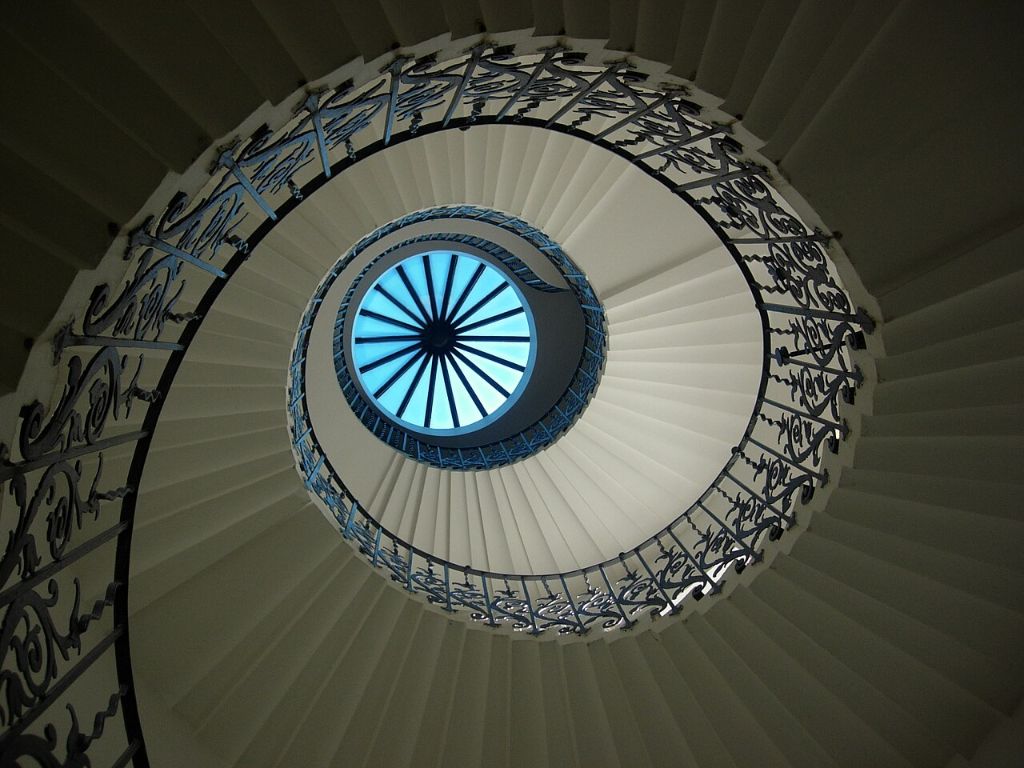
Royal Museums Greenwich says the Queen’s House is free to visit but that you must have a ticket, which can be booked online. It opens daily from 10:00 to 17:00, with last entry at 16:15, and is closed on 24, 25 and 26 December (checked 23 November 2026). You can normally turn up on the day, but booking avoids disappointment at weekends. Inside, look for the spiral Tulip Stairs and the Great Hall, and for the Armada Portrait of Elizabeth I, the most famous image of the queen who was born a few hundred metres away.
What is the best route for a Tudor half-day in Greenwich?
The best route for a Tudor half-day in Greenwich starts at the river, where the palace faced the Thames, moves inland through the Painted Hall and the Queen’s House, and finishes on the hill in Greenwich Park with a view back over the whole site. It needs about four hours and only short walks.
| Start | Stop | What to do | Time at the stop | Walk to the next stop (estimate) |
|---|---|---|---|---|
| 10:00 | Greenwich Pier and riverside terrace | Look at the river frontage where the royal apartments stood | 15 min | 5 min |
| 10:20 | Painted Hall and undercroft | Palace story, 2017 excavated rooms, Thornhill’s ceiling | 75 min | 3 min |
| 11:38 | Chapel of St Peter and St Paul | Free chapel opposite the Painted Hall | 15 min | 8 min |
| 12:01 | Queen’s House | Tulip Stairs, Great Hall, Armada Portrait | 50 min | 10 min |
| 13:01 | Greenwich Park, Queen Elizabeth’s Oak | The old royal hunting park and its Tudor tree | 15 min | 10 min |
| 13:26 | Hilltop by the General Wolfe statue | View back over the palace site to the river | 20 min | Finish (walk down to Greenwich town) |
Total: about 3 hours 46 minutes, of which roughly 3 hours 10 minutes is time at the stops and about 36 minutes is walking. Walking times are estimates for each leg; the climb up the park hill is steep and can take longer.
A few practical notes help. Arrive by boat if you can, because coming in on the river is how the Tudors arrived, and it gives you the best first view of the site. Have lunch in Greenwich town after the hilltop, or bring something to eat in the park in good weather. If you have only two hours, keep the riverside, the Painted Hall and the Queen’s House and drop the park; if you have a full day, add the National Maritime Museum beside the park. The Royal Observatory at the top of the hill is not an option at the moment: Royal Museums Greenwich lists the whole site as closed long-term from 2 November 2026 for its First Light transformation project (Royal Observatory closures, checked 23 November 2026), and points visitors to the National Maritime Museum for space and astronomy in the meantime.
For the rest of your trip, from other royal palaces to the West End, you can plan around this half-day with our partner site’s full guide to the city. thingstodoin-london.com groups sights by area and by interest, which makes it easier to see which days have room for a trip out to Greenwich.
Queen Elizabeth’s Oak
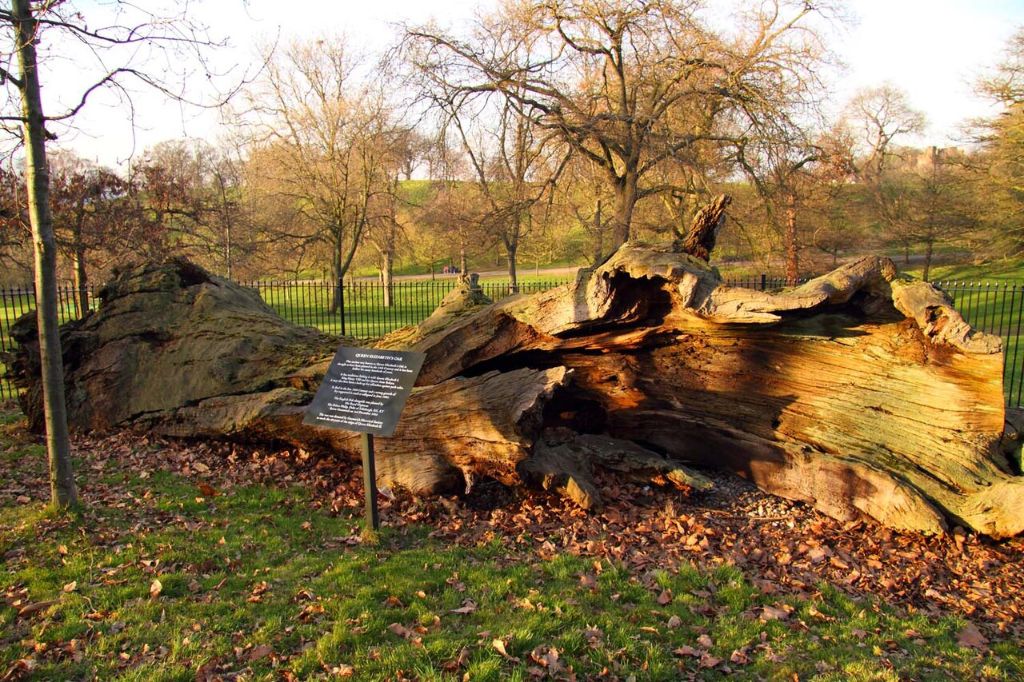
Queen Elizabeth’s Oak is the most direct Tudor survivor in Greenwich Park, even though it is now a fallen trunk rather than a living tree. By long tradition, Henry VIII and Anne Boleyn are said to have danced around it, and the young Elizabeth to have played or taken refreshment in its hollow. The stories are traditions rather than recorded facts, but the tree is very old, and it fell only in the 1990s. Today the trunk lies fenced off near the centre of the park, with a younger oak planted nearby.
Photos: 1) Ввласенко, CC BY-SA 3.0; 2) Mcginnly, CC BY-SA 3.0; 3) Steve Daniels, CC BY-SA 2.0; 4) Txllxt TxllxT, CC BY-SA 4.0; via Wikimedia Commons and Geograph.
Which other Tudor palaces can you combine with Greenwich?
The Tudor palace that combines best with Greenwich is Eltham Palace, about 20 minutes away by train or bus, where Henry VIII spent much of his childhood. Hampton Court Palace, in the far south-west of London, is the best-surviving Henry VIII palace of all, but it needs a separate day.
Eltham Palace was a major royal residence from the fourteenth century and the young Henry VIII lived there with his siblings. Its medieval great hall survives, joined in the 1930s to an Art Deco house built by the Courtauld family, so the visit mixes Tudor-era royal history with twentieth-century design. It is run by English Heritage, and its opening days are limited in winter, so check before you go (checked 23 November 2026).
Hampton Court Palace is the place to see what a Tudor palace actually looked like inside: the Great Hall, the Tudor kitchens and the Chapel Royal survive, alongside later Baroque wings by Wren. Comparing it with Greenwich, where the palace has gone, is a good way to understand what was lost. Historic Royal Palaces publishes its opening times and ticket prices (checked 23 November 2026).
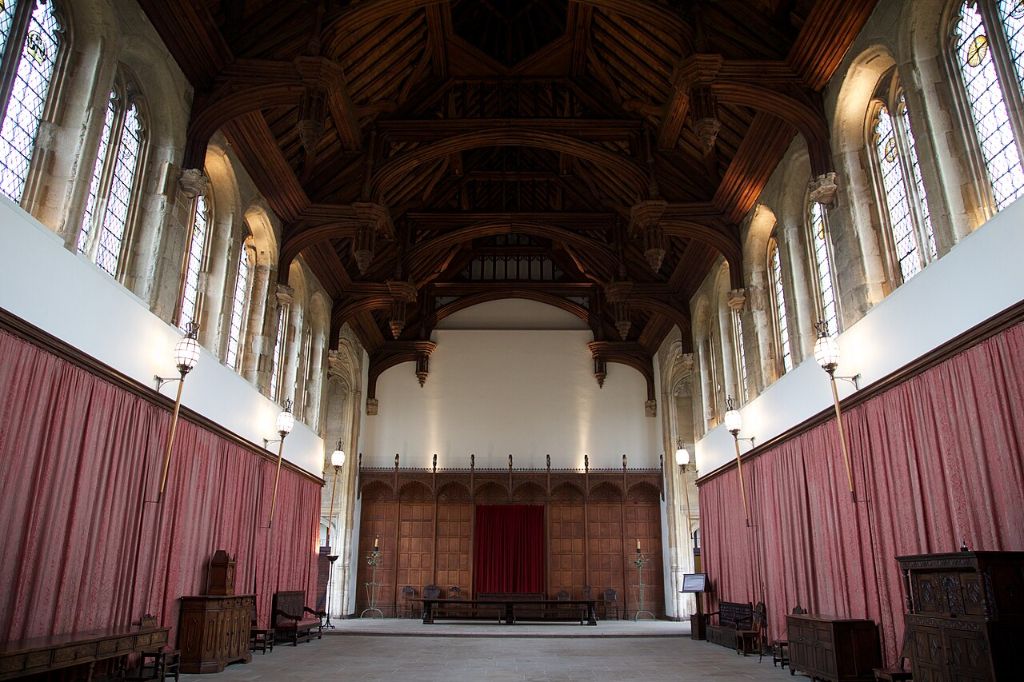
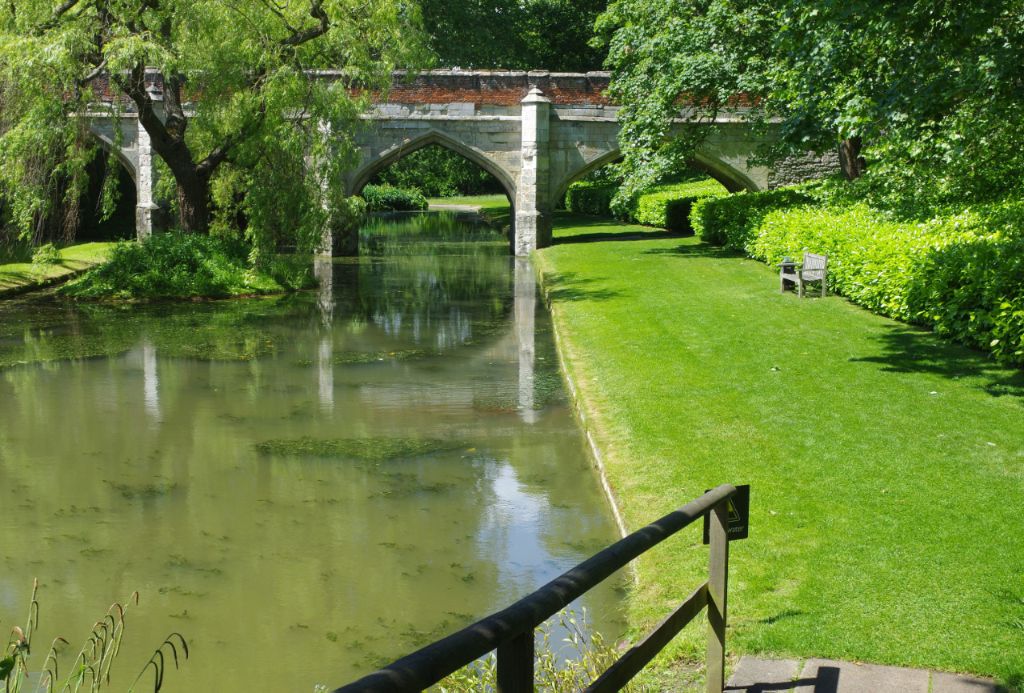
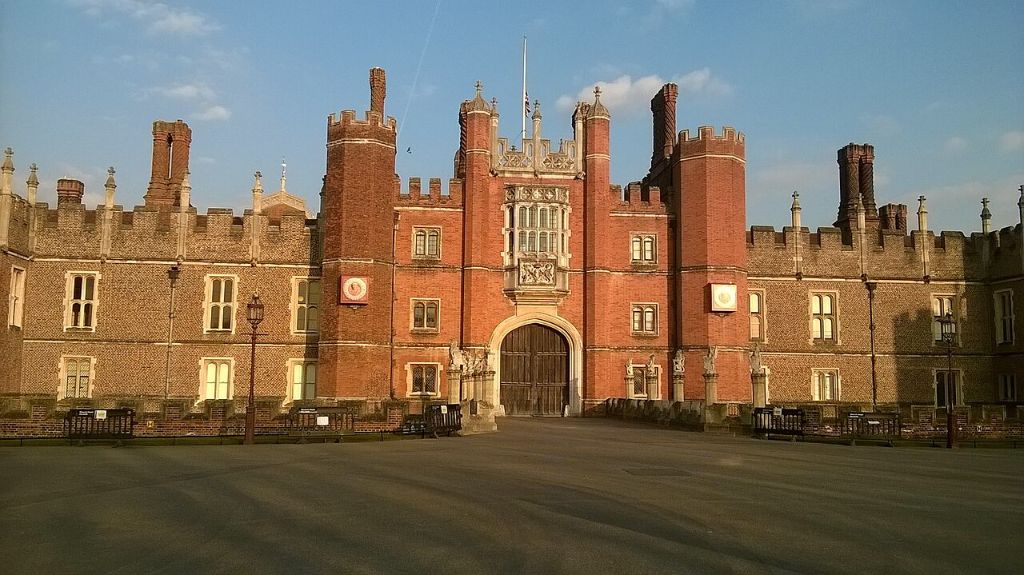
Photos: 1) Tom Parnell, CC BY-SA 4.0; 2) Stephen McKay, CC BY-SA 2.0; 3) Christopher Hilton, CC BY-SA 2.0; via Wikimedia Commons and Geograph.
How do you get to Greenwich, and what can still cost money?
The easiest way to get to the Palace of Placentia site is the DLR to Cutty Sark station, a few minutes’ walk from the Old Royal Naval College, or the Uber Boat river bus to Greenwich Pier, right beside it. National Rail trains from London Bridge to Greenwich or Maze Hill stations are also quick. TfL’s journey planner shows live times and any weekend engineering works (checked 23 November 2026).
Taking the boat is the most fitting choice for a Tudor visit. From central piers such as Westminster, Embankment or Tower, the river bus follows the same route royal barges once took down to Greenwich, and you arrive facing the riverfront where the palace stood. It costs more than the DLR and takes longer, so many visitors go one way by boat and return by train.
What can still cost money
A large part of a Tudor visit to Greenwich is free. The Old Royal Naval College grounds, the Chapel, the Queen’s House and Greenwich Park all cost nothing to enter. The main paid element is the Painted Hall ticket, which is also the way into the undercroft displays about the palace, and which is free for children aged 16 and under with a paying adult. The Discover Greenwich museum is listed separately at a low price. Beyond that, costs come from transport (the river bus is the most expensive option), food in Greenwich town, and any extra paid sights you add, such as the Cutty Sark or the National Maritime Museum, or a trip out to Eltham Palace or Hampton Court.
What if it rains or something is closed?
If it rains or a building is closed, swap the outdoor parts of the route for the indoor ones nearby, which are all within a few minutes’ walk. The table shows the most common problems.
| Problem | Swap to | Why it works |
|---|---|---|
| Heavy rain | Painted Hall, Chapel and Queen’s House only | All indoors and within a short walk of each other |
| Painted Hall closed for an event | Queen’s House and Discover Greenwich | Free or low cost, still on the palace estate |
| Queen’s House closed (24–26 December) | College grounds, Chapel and park | Grounds and park stay open most of the year |
| Park gates closed in the evening | Riverside terrace of the college | The grounds stay open later than the park gates |
| Limited mobility, lift out of order | Queen’s House and the level college grounds | Fewer steps; check access details before travel |
Related Questions
Can you visit the Palace of Placentia?
You cannot visit the Palace of Placentia as a building, because it was demolished and replaced by the Royal Hospital for Seamen at the end of the seventeenth century. You can visit its site at the Old Royal Naval College in Greenwich, where excavated rooms from the Tudor-era friary buildings are displayed beneath the Painted Hall and the grounds are free.
Where was Henry VIII born?
Henry VIII was born at the Palace of Placentia in Greenwich in June 1491. The palace stood on the riverside where the Old Royal Naval College is today. His daughters Mary I and Elizabeth I were also born there, in 1516 and 1533, which makes Greenwich the birthplace of three Tudor monarchs.
Why was the Palace of Placentia demolished?
The Palace of Placentia was demolished because it had fallen into disrepair during the English Civil War of the 1640s and the later Stuarts chose to build something new. Charles II began a replacement palace, and in 1694 William III and Mary II gave the site for a naval hospital designed by Christopher Wren.
Is the Old Royal Naval College free?
The Old Royal Naval College grounds and the Chapel of St Peter and St Paul are free to visit. The grounds open daily from 08:00 to 23:00. The Painted Hall needs a paid ticket, £19 for adults when checked in November 2026, while children aged 16 and under go free with a paying adult.
What is left of Greenwich Palace?
Very little of Greenwich Palace is left above ground. The main surviving traces are two service rooms excavated in 2017 and displayed beneath the Painted Hall, the layout of the site between the river and the park, the Queen’s House built at the edge of the palace gardens, and Greenwich Park, the former royal hunting ground.
Is Greenwich worth visiting for Tudor history?
Greenwich is worth visiting for Tudor history if you are interested in where the Tudors lived and were born rather than in standing Tudor rooms. For complete Tudor interiors, Hampton Court Palace is better. Many visitors combine the two on different days, using Greenwich for the story and Hampton Court for the buildings.
Sources
- Old Royal Naval College: Opening times and closures
- Royal Museums Greenwich: Royal Observatory closures
- Old Royal Naval College: Greenwich Palace
- Old Royal Naval College: Plan a visit
- Old Royal Naval College: Explore what’s here
- Royal Museums Greenwich: Queen’s House
- The Royal Parks: Greenwich Park
- English Heritage: Eltham Palace and Gardens
- Historic Royal Palaces: Hampton Court Palace
- TfL: Plan a journey
Featured photo: Old Royal Naval College from Island Gardens by Christine Matthews, CC BY-SA 2.0, via Geograph and Wikimedia Commons.

Bài viết liên quan
Royal London on a Budget: Free Ceremonies and Palace Views
How to see royal London for free: Changing the Guard, the King's Life Guard at [...]

Domestic Flights in Vietnam: Airlines, Baggage and Booking Tips
A practical November 2026 guide to domestic flights in Vietnam, covering airlines, indicative fares from [...]

Saigon to Cam Ranh: Flight, Train or Overnight Bus
Saigon to Cam Ranh compared for 2026: direct flights, Tan Son Nhat terminals, trains to [...]

Cam Ranh vs Nha Trang: Where Should You Stay?
Cam Ranh vs Nha Trang compared as of November 2026: beaches, airport transfers, food, nightlife, [...]

Cam Ranh Travel Guide: Beaches, Resorts and How to Get There
A practical Cam Ranh travel guide: how to get there from the airport, the best [...]

Hơn 8.000 m² Tiện Ích Ngoài Trời TT Genesis Được Quy Hoạch Ra Sao?
Hơn 8.000 m² tiện ích ngoài trời TT Genesis là một trong những điểm nhấn [...]

Dinh Thự The Collectors’ Được Bảo Hành Bao Lâu?
Dinh thự The Collectors’ được bảo hành trong thời hạn 24 tháng, tính từ khi [...]

Diện tích căn hộ TT Genesis chênh lệch khi bàn giao xử lý ra sao?
Diện tích căn hộ TT Genesis nếu có chênh lệch khi bàn giao sẽ được [...]